In This Article
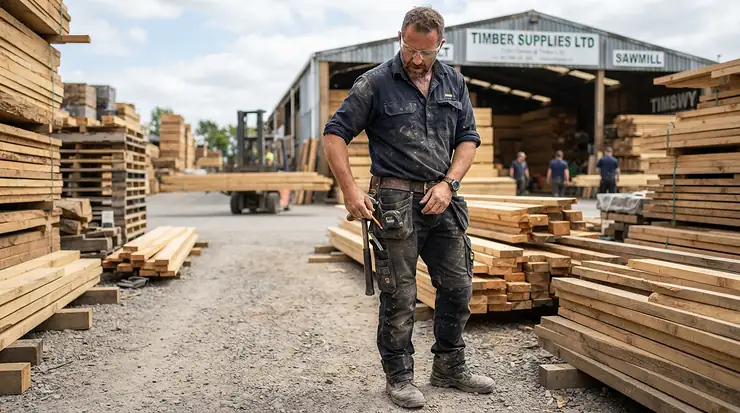
Britain doesn’t do dramatic weather. It does relentless weather. A grey drizzle that starts at 7:40am, settles into your kneecaps by ten, and follows you home like a stray dog. If your job keeps you outdoors, the wrong pair of waterproof trousers for work turns a Tuesday into an endurance event.
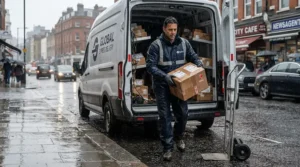
Here’s the thing most buyers miss: “waterproof” is a claim, not a guarantee. Some trousers are genuinely sealed, with taped or welded seams and a proper coating. Others are showerproof with ambition. And if you’re on a site, a verge or a rail corridor, there’s a third question layered on top: does the garment carry the right PPE standards for the job?
That’s what this guide is for. I’ve dug through manufacturer data sheets, standards documentation and aggregated customer feedback to shortlist seven real options, from packable budget overtrousers to hi-vis waterproof trousers UK crews actually get told to wear. Everything is analysis, not anecdote: I haven’t worn these, so you won’t get an invented “I tested them in a storm” story.
One legal point worth knowing early. The Health and Safety Executive states that employers must provide PPE free of charge when a risk assessment shows it’s needed, so if you’re employed, ask before you spend your own money. Self-employed? Read on.
What Are Waterproof Trousers for Work?
Waterproof trousers for work are protective legwear designed to keep rain, spray and mud out during outdoor or wet-environment jobs. They typically use a PU-coated or laminated fabric with sealed (taped or welded) seams, and range from lightweight overtrousers worn over your normal kit to standalone waterproof trade trousers with built-in pockets and knee protection.
That’s the 50-word version. The longer one is that the category splits three ways:
- Overtrousers: pulled on over your usual trousers when the sky turns. Cheap, packable, quick.
- Standalone tough waterproof workwear trousers: worn as your everyday trousers, with pockets, reinforced panels and a proper fit.
- Hi-vis waterproofs: certified for visibility and rain, built for roadside, rail and utilities.
Which one wins depends on how wet you get, how much you kneel, and whether someone else’s reversing vehicle is part of your day. We’ll match each type to real jobs further down.
Quick Comparison: 7 Waterproof Trousers for Work at a Glance
| Product | Type | Key standard (as listed) | Price range* | Best For |
|---|---|---|---|---|
| Regatta Pro Packaway Overtrousers | Packable overtrousers | Isotex 10,000 fabric | Budget | Occasional rain, stashing in a van |
| Portwest Sealtex Ultra S493 | Hi-vis overtrousers | EN ISO 20471 Class 1; EN 343 3:2 | Budget–mid | Hi-vis on a tight budget |
| Snickers 8201 Rain Trousers | Lightweight stretch overtrousers | EN 343 (Class 3:1) | Mid | Active trades, welded seams |
| Helly Hansen Gale Rain Construction Trousers | Construction rain trousers | EN 343:2003+A1:2007 3,1 | Around £60 | Site work, hanging tool pockets |
| Pulsar Evolution EVO101 | 3-layer hi-vis overtrousers | EN ISO 20471 Class 2; EN 343:2019 4:4 | Roughly £55–£75 | Heavy rain, roadside, utilities |
| Helly Hansen Alta Hi Vis Waterproof Rain Trousers | Hi-vis rain trousers | EN ISO 20471 Class 2; EN 343:2019 4,1,X | Around £60 | Lighter hi-vis for all-day wear |
| Portwest PW3 Rain Trouser (T604) | Slim-fit trade trousers | EN 343 Class 3 | Mid–upper | Kneeling, cargo pockets, tools |
*Ranges reflect what I found at the time of research and can change; check current price and availability.
Reading the table, the Portwest PW3 Rain Trouser (T604) is the only one here built like proper trade trousers, with knee pockets and cargo storage, while the Pulsar Evolution EVO101 has the strongest published waterproof rating. If you want certified hi-vis without a big spend, the Portwest Sealtex Ultra S493 is the entry point, though its Class 1 rating limits where it can be your only hi-vis layer. The Regatta Pro Packaway Overtrousers are the “just in case” pick, and I’d want to see EN 343 stated before relying on them as PPE.
💬 Just one click — help others make better buying decisions too!😊
Top 7 Waterproof Trousers for Work: Expert Analysis
Each entry below is a spec-and-reviews analysis. Where I could verify real aggregated review sentiment, I’ve reported it. Where I couldn’t, I’ve said so rather than making something up.
1. Regatta Pro Packaway Overtrousers — best packable backup for occasional rain
Its standout trick is the stuff sack: these fold down small enough to live behind a seat or in a tool bag, ready for the day the forecast lies.
The specs matter here. The fabric is Isotex 10,000, a waterproof, breathable and windproof polyamide with a 10,000mm hydrostatic head and a water-repellent finish, plus taped seams, an elasticated waist, side pocket access and press-stud hems. In practice, 10,000mm handles typical British rain comfortably, but it won’t match the sustained-downpour ratings of the heavier certified options below.
My read: this is for the tradesperson who is only occasionally outside, such as an electrician doing an external run or a plumber crossing a car park. It isn’t built for kneeling on wet concrete all day, because there’s no reinforcement. The listing I reviewed doesn’t state EN 343, so don’t treat it as certified PPE if your employer requires that.
Aggregated Amazon UK feedback on the listing I checked was broadly favourable: of customers mentioning quality, 50 out of 55 were positive; on value for money, 36 out of 38 were positive; and on fit, 40 out of 52 were positive, with the complaints leaning towards sizing. One buyer noted they’re generous enough to fit over baggy trousers.
Pros:
- ✅ Packs into a compact stuff sack
- ✅ Taped seams and windproof finish
- ✅ Strong value-for-money sentiment in reviews
Cons:
- ❌ No stated EN 343 certification on the listing
- ❌ No reinforcement for kneeling or abrasion
Price range: budget bracket (check current price). Verdict: superb backup value, wrong choice for daily heavy exposure.
2. Portwest Sealtex Ultra S493 — hi-vis waterproofs at an entry-level price
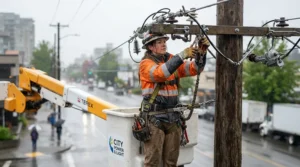
This is the affordable way into certified hi-vis: yellow PU-coated trousers with welded seams and reflective tape.
The published specs are 100% polyester tricot knit, PU coated, with welded seams, a fully elasticated waistband and stud-adjustable hems. It’s certified to EN ISO 20471 Class 1 and EN 343 Class 3:2. Class 1 is the minimum visibility level, so on its own it suits lower-risk areas; in certain jacket-and-trouser combinations, garments can be certified together for a higher class.
Who’s it for? Groundworkers, landscapers and site staff who need rain cover and visible legs but aren’t next to fast traffic. The stretchy, wipe-clean fabric is a practical plus: mud rinses off, which extends how long the reflective tape stays effective. Portwest describes the fabric as lightweight, which means comfort, but it also means this is a rain layer, not an abrasion-resistant trade trouser.
I couldn’t verify a meaningful pool of aggregated review data for this exact style, so I’d read the most recent Amazon UK reviews for sizing comments before ordering.
Pros:
- ✅ Welded seams keep water out
- ✅ EN ISO 20471 and EN 343 on one garment
- ✅ Wipe-clean, stretchy fabric
Cons:
- ❌ Class 1 hi-vis only
- ❌ Lightweight fabric, no reinforced knees
Price range: budget to lower mid-range (check current price). Verdict: the sensible cheap hi-vis option if Class 1 meets your site rules.
3. Snickers 8201 Rain Trousers — lightweight, stretchy and welded shut
Snickers has made rainwear feel less like wearing a bin bag, and this is the clearest example.
The fabric is PU-coated polyester tricot at 190 g/m², with welded seams, heat-sealed 3M reflective tapes, two large front pockets, hook-and-loop ankle adjustment and an easy pull-on cut. EN 343 certification lists water penetration Class 3 and water vapour resistance Class 1 (3:1). That vapour rating is the honest trade-off: it’s fully waterproof, but on a hard-working day you’ll build up more internal moisture than in a highly breathable laminate.
The analysis: these suit trades that move a lot, such as scaffolders’ ground crews, roofers on the ground, and gardeners, because the stretch means climbing into a van or up a step doesn’t feel like fighting a tarpaulin. The reflective tape adds visibility, but I couldn’t find an EN ISO 20471 classification, so don’t count it as certified hi-vis.
Review data for the 8201 wasn’t verifiable in a form I could aggregate here, so treat any five-star claims from retailers with caution and check recent buyer feedback on sizing.
Pros:
- ✅ Welded seams and EN 343 certification
- ✅ Stretchy, smooth fabric moves with you
- ✅ Hook-and-loop ankle adjustment fits over boots
Cons:
- ❌ Vapour resistance Class 1 means less breathable
- ❌ Two front pockets only, and no knee protection
Price range: mid-range (check current price). Verdict: an excellent active-trade shell if you value movement over maximum breathability.
4. Helly Hansen Gale Rain Construction Trousers — built around a tool belt
The standout feature is practical: an opening for hanging pockets, so you can keep your tool pouch on while the waterproofs sit over the top.
The fabric is 100% PU on polyester knit at 240 g/m², heavier than several rivals, with EN 343:2003+A1:2007 classification 3,1. There’s an adjustable waist, a ruler pocket and an adjustable leg with snap buttons. That 240 g/m² weight is a genuine durability signal: heavier knit tends to shrug off scuffs from scaffold boards and pallets better than featherweight shells.
For whom? Carpenters, fitters and general site trades who wear a belt or holster pouch and hate removing kit for a shower. Helly Hansen’s own site notes customers say the fit is true to size, so stick to your normal size. That’s manufacturer-hosted feedback with a very small review count, so treat it as a hint rather than proof.
It’s not a hi-vis garment, and vapour resistance is on the modest side (the “1” in 3,1), so plan on a breathable base layer.
Pros:
- ✅ Hanging-pocket opening works with tool belts
- ✅ Heavier 240 g/m² PU-coated knit
- ✅ Adjustable waist and snap-button legs
Cons:
- ❌ Not certified hi-vis
- ❌ Modest breathability rating
Price range: around £60 direct from the manufacturer at the time of research (check Amazon for current price). Verdict: the best-thought-out overtrouser here for belt-wearing site trades.
5. Pulsar Evolution EVO101 — the heavy-rain hi-vis workhorse
If your day involves standing in a downpour beside moving vehicles, this is the one to look at first.
It’s a 3-layer polyester woven twill with a PU laminate membrane, EN ISO 20471 Class 2 and, on the manufacturer’s current listing, EN 343:2019 Class 4:4. Some older retailer pages still quote 3:3, which reflects the earlier edition of the standard, so check the label on the garment you receive. Add gusseted hems with waterproof zips, a drawcord waist, combat-style thigh pockets on each leg, a rear patch pocket with a flap, and reflective 3M tape and chevron detailing. Arco lists a maximum of 25 washes at 40°C, so wash sparingly.
Those zips are the practical gem. They let you step into boots without wrestling the hem, and the gusset keeps grit out of the teeth, which is exactly where cheaper zips die.
My analysis: this is the sensible choice for utilities, highways and rail-adjacent crews, where hi-vis Class 2 legs and top-tier waterproofing are both required. It’s an overtrouser, so buy a size up: the retailer advice is to add 3 to 4 inches to your waist size.
I couldn’t confirm a verified aggregated review score for this listing on Amazon UK, so check recent buyer comments.
Pros:
- ✅ Top-tier waterproof and breathability class
- ✅ Class 2 hi-vis with waterproof zips at the hems
- ✅ Thigh cargo pockets for small tools
Cons:
- ❌ Wash limit of 25 cycles at 40°C
- ❌ Overtrouser cut means sizing up
Price range: roughly £55–£75 depending on retailer. Verdict: strong value for genuine top-class weather and hi-vis protection.

6. Helly Hansen Alta Hi Vis Waterproof Rain Trousers — lighter Class 2 for all-day wear
The Alta is the more relaxed option for hi-vis: lighter, simpler and still properly certified.
It uses a 170 g/m² polyester with PU coating, EN ISO 20471:2013 Class 2 and EN 343:2019 classification 4,1,X, plus an elastic waist and adjustable bottom hem. What does that mean in practice? Class 4 waterproofing puts it near the top of the current scale for keeping water out, while the “1” for breathability tells you it’s more of a shell than a sweat-wicking laminate. Where the Pulsar is built for extreme exposure, the Alta suits mixed conditions where you want to be seen and dry without carrying much weight.
There is a useful sizing note: Helly Hansen reports that customers say these run large, and recommends sizing down. That’s manufacturer-hosted feedback from a small sample, so verify the size chart. For background on why hi-vis matters and how standards are structured, Wikipedia’s overview of high-visibility clothing is a decent starting point, including the UK rail standard RIS-3279-TOM.
Notably, it has no cargo pockets or knee provision, so it’s a rain-and-visibility layer only.
Pros:
- ✅ Class 2 hi-vis plus Class 4 waterproofing
- ✅ Lightweight 170 g/m² fabric
- ✅ Adjustable hem and elastic waist
Cons:
- ❌ Runs large per customer feedback on the brand site
- ❌ No pockets or knee reinforcement
Price range: around £60 direct from the manufacturer at the time of research. Verdict: a well-balanced certified hi-vis layer for long days.
7. Portwest PW3 Rain Trouser (T604) — the closest thing to real waterproof trade trousers
This is the one that behaves like a trouser rather than a shell. It has external kneepad pockets, cargo pockets and a padded back panel, all in a waterproof package.
The published features include a 300D Oxford weave polyester shell, double PU coated, with taped seams, a fully elasticated waistband, side zip leg openings, an ergonomically shaped hem, a slimline fit, reflective piping and eight pockets including cargo, rule and a large rear zip pocket. Standards listings vary: several UK retailers list EN 343 Class 3:1 X with a 20,000mm water column, while at least one Amazon listing quotes Class 3 3 X at 10,000mm. Trust the label on the garment you receive.
The analysis: the knee pockets accept pads, which is how you get real knee protection. Note that the pockets aren’t the same as certified pads, and per Bitco’s guidance, trousers only meet EN 14404 when fitted with the specific pads the manufacturer names. For flooring, plumbing, decorating and fencing, this is the best fit for tough waterproof workwear trousers on this list.
I couldn’t verify a solid aggregated review score, so read recent Amazon UK feedback on the slim fit, especially if you wear thermals underneath.
Pros:
- ✅ Kneepad pockets and cargo pockets included
- ✅ Padded back panel for lower-back warmth
- ✅ Side zips make boots easy to fit
Cons:
- ❌ Slim fit can feel tight over layers
- ❌ Not a certified hi-vis garment
Price range: mid-range to upper (check current price). Verdict: the most complete trade trouser here, if you don’t need hi-vis.
How to Choose Waterproof Trousers for Work
Choosing the right pair comes down to seven checks, in this order:
- Confirm the requirement. Ask your employer or principal contractor what’s mandatory: hi-vis class, EN 343 and any rail standard. The requirement decides everything else.
- Pick your type. Overtrousers for occasional rain; standalone waterproof trade trousers for daily wear; hi-vis waterproofs for traffic and rail.
- Check the seams. Look for taped or welded seams. Stitched, unsealed seams let water wick through the needle holes.
- Read the EN 343 numbers. The first number is waterproofness; the second is vapour resistance. Higher is generally better on both, and in the 2019 version 4 is the top of the scale.
- Match your movement. If you kneel, look for kneepad pockets or reinforced panels; if you climb, prioritise stretch and long side zips.
- Size for your layers. Overtrousers need room over your work trousers, while slim standalone trousers need thermals in mind.
- Look at the details. Adjustable hems, gusseted zips and stud closures decide whether they fit over boots without gaps.
The trap is buying on a headline number alone. A 20,000mm rating on the box means little if the seams leak or the hem funnels water into your boots.
Waterproof Trousers for Work: PPE Standards Explained
PPE standards look like alphabet soup until you know the three that matter most.
EN ISO 20471 covers high-visibility clothing. Class 1 is the minimum, Class 2 is the most common on construction sites, and Class 3 is the highest, requiring 0.80m² of fluorescent material and 0.20m² of reflective tape, with full sleeves or full-length trouser legs. Garments can also be labelled with a maximum number of washes, so a faded pair is a non-compliant pair.
EN 343 covers protection against rain. The garment is given two scores, one for water penetration and one for water vapour resistance. On the 2019 scale, 4:4 is the best rating.
EN 14404 covers kneepads used with work trousers. This one catches people out: trousers only comply when fitted with the specific pads named by the manufacturer, so don’t assume your favourite third-party pads count.
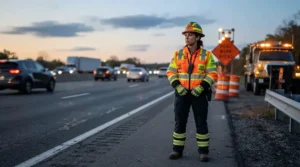
For context on when hi-vis is required, HSE’s construction guidance says high-visibility clothing should be worn wherever vehicles or plant are operating, and that temporary traffic management workers need a higher standard, including a hi-vis long-sleeved jacket and trousers. Rail work has its own rules, so check RIS-3279-TOM where relevant.
Hi-Vis Waterproof Trousers UK: When You Actually Need Them
Hi-vis waterproof trousers UK crews wear aren’t a fashion statement. Rain cuts visibility for drivers, dusk arrives early from October, and legs are the part of a worker that moves, which is why reflective bands on the legs are useful for motion recognition.
You’ll generally need them if you work near moving vehicles or plant, on highways and verges, in rail corridors, in depots and yards, or on any site with a hi-vis policy. If you’re a joiner working inside a finished house, probably not.
Which class? The Portwest Sealtex Ultra S493 is Class 1, while the Pulsar Evolution EVO101 and Helly Hansen Alta Hi Vis Waterproof Rain Trousers are Class 2. Class 1 suits lower-risk environments, whereas Class 2 is the everyday site standard. Some jacket-and-trouser pairs can be certified together for a higher combined class, but only when the total surface area and coverage meet the standard, so check the labels rather than assuming.
Keep them clean, too. Mud on reflective tape is the quickest way to make expensive hi-vis behave like ordinary yellow fabric.
Reinforced Knees and Cargo Pockets: Features That Actually Matter
Marketing loves a feature list. Your knees and your tools care about about three things.
Reinforced knees. Kneeling on gravel wears fabric fast. Reinforced panels, often a tougher material such as Cordura, extend a trouser’s life where you crouch, and kneepad pockets let you add real protection. Of the seven here, only the Portwest PW3 Rain Trouser (T604) offers kneepad pockets.
Cargo pockets. Deep thigh pockets are handy for a tape, a phone and gloves. The Portwest PW3 Rain Trouser (T604) and Pulsar Evolution EVO101 both offer thigh or cargo storage, while the Helly Hansen Gale Rain Construction Trousers trade pockets for a hanging-pocket opening.
Sealed seams. This is the boring feature that decides everything. Taped or welded seams are the difference between “waterproof” and “waterproof until you sit down”.
What doesn’t matter as much: extra branding, oversized logos and decorative piping. Reflective piping is a sensible bonus, but it isn’t a substitute for certification.
Overtrousers vs Bib and Brace vs Standalone Waterproof Trade Trousers
| Type | Best For | Trade-off |
|---|---|---|
| Overtrousers, such as the Regatta Pro Packaway Overtrousers | Occasional rain, quick changes | No pockets or reinforcement |
| Standalone trousers, such as the Portwest PW3 Rain Trouser (T604) | Daily wet-weather wear | Less easy to whip on and off |
| Bib and brace | Prolonged heavy rain, bending | Bulkier and warmer |
Overtrousers are the flexible choice. You pull them on when the weather turns and remove them when it clears, and Helly Hansen notes they’re ideal for unpredictable weather. Standalone waterproof trade trousers make more sense when the rain is the constant, not the exception.
Bib designs, per Helly Hansen’s guidance, cover the chest and back and help stop water entering at the waist when you bend or kneel. If you spend hours bent double in soaking conditions, they’re worth a look, though none of my seven picks is a bib.
The verdict? Most tradespeople end up with two: a packable pair like the Regatta Pro Packaway Overtrousers for surprise showers, and a hardwearing option like the Portwest PW3 Rain Trouser (T604) or Helly Hansen Gale Rain Construction Trousers for the wet season.
Practical Guide: Getting the Most From Your Waterproofs
A few habits will double the life of any pair.
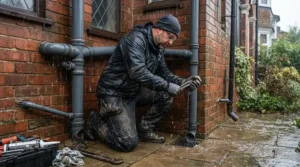
Set-up. Try them on over your actual work trousers and boots. Adjust the waist and hems, and test the zips while crouched, not standing.
First-use tips. Wear them in light rain first. If water gets in at the hem, the fix is usually tightening the stud or hook-and-loop closure or tucking correctly over the boot.
Washing. Follow the label. Most of these are machine washable at 40°C with no bleach, tumble drying or ironing. Wash hi-vis pieces gently: the Pulsar Evolution EVO101 lists a 25-wash limit.
Drying. Hang them up. Don’t leave wet trousers scrunched in the van, because trapped moisture damages coatings.
Common mistakes in the first 30 days:
- Sizing too tight, then blowing the seams
- Kneeling on sharp debris without pads
- Wearing them without a breathable base layer, then blaming the trousers for sweat
- Ignoring the label’s wash limit
Small habits, big returns.
Real-World Scenarios: Which Pair Suits Which Job?
Three profiles, matched to products with reasoning.
The self-employed plumber (six days a week, mixed indoor and outdoor). Budget matters, but so does kneeling. The Portwest PW3 Rain Trouser (T604) is the strongest fit for waterproof trade trousers with knee pockets, and a packable Regatta Pro Packaway Overtrousers in the van covers surprise showers.
The highways operative (10-hour shifts, winter, near moving traffic). Hi-vis Class 2 and top-end waterproofing are non-negotiable. The Pulsar Evolution EVO101 fits, with the Helly Hansen Alta Hi Vis Waterproof Rain Trousers as a lighter alternative for milder days.
The groundworker on a mixed site (daily rain, tool belt, site hi-vis policy). The Helly Hansen Gale Rain Construction Trousers handle the tool belt while a hi-vis jacket does the visibility work, or the Portwest Sealtex Ultra S493 covers Class 1 legs on a budget.
Notice what these have in common: the buyer starts with the risk, not the product. That’s the whole trick.
Long-Term Cost and Maintenance
Let’s do some arithmetic. Say a pair around £60 gets worn on 150 wet days across two winters. That’s roughly 40p per day. A £20 pair that leaks after 40 days costs 50p per day and leaves you wet, so the cheap option isn’t always cheap.
Durability drivers: fabric weight (the Helly Hansen Gale Rain Construction Trousers use a 240 g/m² knit), seam quality, zip quality and how you wash them. Where hi-vis is concerned, replacement is dictated by compliance as well as wear, since faded or over-washed hi-vis may no longer meet the standard.
One last check before you buy: make sure the garment carries proper conformity marking. The UK still recognises CE marking for the Great Britain market alongside UKCA, according to government guidance on placing UKCA or CE marked products on the market. Genuine PPE will also include the standard references and instructions on the label. If a listing shows neither, ask before you buy.
FAQ
❓ Are waterproof trousers for work covered by PPE rules?
❓ What does EN 343 mean on waterproof trade trousers?
❓ Can I use hi-vis waterproof trousers UK sites will accept on the road?
❓ Do tough waterproof workwear trousers come with reinforced knees?
❓ How many washes will hi-vis waterproofs survive?
Conclusion
The best waterproof trousers for work aren’t the ones with the biggest number on the tag. They’re the ones that match your job’s actual risks: rain, traffic, kneeling, tools and budget.
If you kneel and carry tools, the Portwest PW3 Rain Trouser (T604) is the strongest all-rounder. If you work near traffic in heavy rain, the Pulsar Evolution EVO101 offers the most complete published protection, with the Helly Hansen Alta Hi Vis Waterproof Rain Trousers as a lighter certified alternative. On a tight budget, the Portwest Sealtex Ultra S493 is your hi-vis entry point and the Regatta Pro Packaway Overtrousers are the cheap “just in case” pair. Belt-wearers should look at the Helly Hansen Gale Rain Construction Trousers, and movers should consider the Snickers 8201 Rain Trousers.
Check the label, ask your employer what’s required, and buy for the worst day, not the average one.
Recommended for You
- Cycling Waterproof Trousers: 7 Proven UK Picks (2026)
- Hiking Waterproof Trousers: 7 Best Picks For UK Walkers (2026)
- Rain Trousers General Purpose: 7 Best Picks For UK Rain (2026)
Disclaimer: This article contains affiliate links. As an Amazon Associate, I earn from qualifying purchases. If you purchase products through these links, we may earn a small commission at no additional cost to you.
✨ Found this helpful? Share it with your friends! 💬🤗
