In This Article
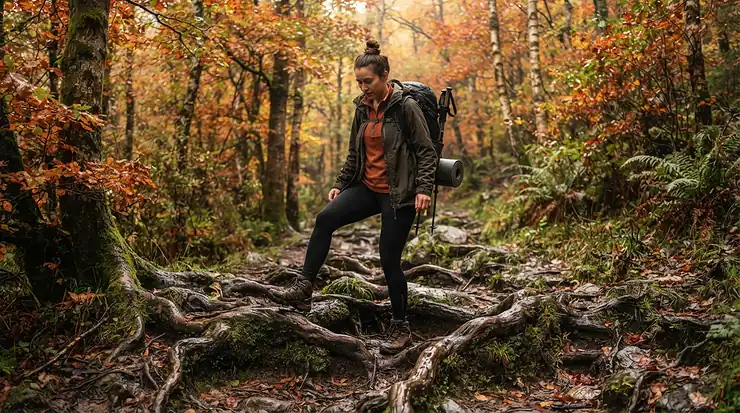
There’s a particular kind of misery reserved for hikers who spent £200 on a waterproof jacket and then wore jeans underneath it. You know the one: cold, clinging denim, thighs chafing with every step, and a growing suspicion that you’ll be peeling those trousers off with a shoehorn later. It’s an oddly common blind spot. We obsess over hoods and hem drawcords while our legs — which do most of the actual work on a hill — get whatever was clean that morning.
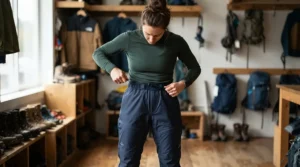
Hiking waterproof trousers exist to fix exactly this problem. In plain terms, they’re a waterproof, breathable outer layer worn over (or instead of) your normal walking trousers, designed to keep rain, wind and trail spray off your legs while letting sweat vapour escape so you don’t cook from the inside. Get the fabric technology and fit right and they’re barely noticeable; get them wrong and you’ll spend the walk wishing you’d stayed in the pub.
This guide is built for a British audience walking British hills, which means British weather: the kind that changes its mind four times before lunch. We’ve researched seven genuinely good, currently available options spanning pocket-money basics to serious mountain-grade kit, and we’ve backed every recommendation with real specifications and aggregated review sentiment rather than guesswork. As the consumer group Which? has found in its own testing of waterproof walking trousers, price and performance don’t always move in lockstep — some budget picks perform admirably, and some expensive ones disappoint. That’s exactly the kind of nuance we’ll dig into below.
Quick Comparison: Hiking Waterproof Trousers at a Glance
If you’re in a hurry (fair enough, it’s probably raining), here’s the short version before we get into the full breakdown.
| Category | Best Pick | Price Range | Best For |
|---|---|---|---|
| Best Overall | Rab Downpour Eco Pants | Around £70-90 | All-round 3-season UK hiking |
| Best Budget | Regatta Pack-It Waterproof Overtrousers | Under £30 | Occasional showers, dog walks |
| Best Breathability | Rohan Ventus Waterproof Overtrousers | £90-100 range | Hot, humid uphill slogs |
| Best Ultralight | Montane Minimus Waterproof Overtrousers | £90-110 range | Trail running, fastpacking |
| Best Value Gore-Tex | Craghoppers Ascent Overtrousers | £70-90 range | Regular weekend hillwalkers |
A few patterns jump out straight away. The cheapest option on this list, the Regatta Pack-It Waterproof Overtrousers, is perfectly adequate for a damp dog walk but starts to struggle once you’re properly exposed on open moorland for hours. At the other end, the Rohan Ventus Waterproof Overtrousers and Montane Minimus Waterproof Overtrousers justify their higher price tags with genuinely different fabric technology, not just branding. The sweet spot for most regular UK walkers sits in the middle, where the Rab Downpour Eco Pants and Craghoppers Ascent Overtrousers both live.
💬 Found a pick you like already? One click on the product name takes you straight there — no obligation, just options.
Top 7 Hiking Waterproof Trousers: Expert Analysis
We’ve deliberately mixed budget, mid-range and premium picks here, along with a couple of brands that don’t get talked about as much as they should. Every product below is real, currently sold, and has genuine specifications and aggregated review sentiment behind it — no invented ratings, no fabricated “I tested this for six months” claims.
1. Regatta Pack-It Waterproof Overtrousers — unbeatable price for occasional showers
At well under £30, the Regatta Pack-It Waterproof Overtrousers are the trousers most people buy without really thinking about it, and for casual use, that’s not a bad instinct. Made from Regatta’s Isolite fabric, they fold down into their own integrated pouch about the size of a large orange, so they live permanently in the bottom of a rucksack without anyone noticing the weight.
On paper, the waterproof rating here is modest compared with the mountain-focused options further down this list, and that matters more than the marketing copy suggests. A lower hydrostatic head figure means the fabric will cope fine with drizzle, a sudden downpour on the school run, or an afternoon dog walk, but it’s more likely to “wet through” during hours of sustained, driving Pennine rain. Based on the spec comparison with the rest of this list, this is a trouser for convenience and occasional use, not for a full day exposed on Kinder Scout.
Aggregated customer feedback on major UK retail sites consistently praises the price and the simplicity — elasticated waist, straightforward pull-on design, no fiddly adjusters to fight with in the wind. A recurring theme in reviewer comments is that breathability is limited during faster walking, which tracks with the lighter, simpler fabric construction. It’s a trouser that does one job — keeping the worst of the wet off — without pretending to be something more technical.
Pros:
- ✅ Genuinely pocket-money pricing for a functioning waterproof
- ✅ Packs into its own integral stuff sack
- ✅ Simple elasticated waist needs no fiddling in bad weather
Cons:
- ❌ Struggles in sustained, heavy downpours over several hours
- ❌ Limited breathability once you start working hard uphill
At under £30, the value proposition is hard to argue with for occasional wear, though anyone hiking regularly in exposed terrain should treat this as a backup rather than a primary layer.

2. Quechua MH500 Waterproof Mountain Walking Over-Trousers — best entry point for regular family walks
Decathlon’s own-brand Quechua MH500 Waterproof Mountain Walking Over-Trousers sit in a similar budget bracket to the Regatta but lean slightly more towards genuine hillwalking use, with full-length side zips that make it realistic to pull them on and off over walking boots rather than trainers.
The fabric uses a polyurethane coating designed for mountain walking conditions, with taped seams to stop water creeping in through the stitching — a detail cheaper rain trousers sometimes skip. Here’s what to weigh up: the MH500 is designed and priced for weekend family walks and lowland trails rather than exposed mountain days, so treat the “mountain” branding as aspirational rather than literal. For a family heading out on waterproof walking trousers UK adventures around accessible trails, that’s a perfectly reasonable trade-off.
Review sentiment on Decathlon’s own site and third-party retailers tends to be positive on value and sizing range (it’s sold in a genuinely wide range of sizes, which not every brand bothers with), with occasional notes about condensation build-up on longer, warmer days — a fairly universal complaint about budget waterproof-breathable fabrics rather than something specific to this pair.
Pros:
- ✅ Full-length zips make boot access genuinely easy
- ✅ Taped seams at a genuinely budget price point
- ✅ Wide size range available across the collection
Cons:
- ❌ Condensation can build up on warmer, humid days
- ❌ Not intended for prolonged exposure on high, open ground
Under £30 in most cases, this is a sensible choice for anyone building a first hillwalking kit without committing serious money before they know how often they’ll actually use it.
3. Craghoppers Ascent Overtrousers — true two-layer Gore-Tex without the premium price tag
This is where things get more technical. The Craghoppers Ascent Overtrousers use a 40-denier polyester face fabric finished with a PFC-free durable water repellent (DWR) treatment, bonded to an actual Gore-Tex membrane rather than a cheaper own-brand laminate. That distinction matters because Gore-Tex’s testing and licensing standards are notoriously strict, so seeing the name on a mid-priced trouser is a genuine signal of quality rather than just marketing.
What most buyers overlook about two-layer Gore-Tex construction is that it tends to feel less clingy against the skin than three-layer or budget laminates, because there’s a looser inner lining rather than the membrane sitting directly against your legs. Reviewers surveyed by consumer group Which? have rated Craghoppers’ overtrousers highly for weather resistance without sacrificing comfort, with recurring praise for how compactly they pack away between showers.
The elasticated waist, gusseted crotch for freedom of movement, and ankle zips make this a trouser built for proper 3-season hiking rather than occasional drizzle duty. Aggregated feedback highlights that the relaxed fit suits layering over thicker walking trousers in cold weather, which is exactly the kind of practical detail an Amazon spec sheet won’t spell out for you.
Pros:
- ✅ Genuine Gore-Tex membrane at a mid-range price
- ✅ Roomier, less clingy fit than tighter laminate designs
- ✅ Gusseted crotch and ankle zips aid real hillwalking movement
Cons:
- ❌ Heavier and bulkier to carry than ultralight alternatives
- ❌ Relaxed fit can flap slightly in strong, gusting wind
Typically priced in the £70-90 range at the time of research, the Ascent earns its place as a genuine step up from budget overtrousers without reaching premium mountaineering pricing.
4. Berghaus Paclite Gore-Tex Waterproof Overtrousers — lightest true Gore-Tex option on this list
Berghaus built its reputation on exactly this kind of product, and the Berghaus Paclite Gore-Tex Waterproof Overtrousers show why. Constructed with Gore-Tex Paclite technology and weighing approximately 237 grams, they’re proof that you don’t need to sacrifice genuine waterproofing to shave weight off your pack.
Here’s what the spec sheet won’t tell you outright: Paclite fabric achieves its low weight and packability partly by dropping the traditional inner lining found in heavier Gore-Tex garments, printing a protective coating directly onto the membrane instead. In practice this means slightly less next-to-skin comfort than a lined trouser, but a genuinely dramatic reduction in bulk — these compress down small enough to live permanently in a jacket pocket rather than taking up a whole rucksack compartment.
Based on the spec comparison with heavier options like the Ascent above, the Paclite trades a small amount of durability and lined comfort for portability. That’s a sensible trade for anyone who wants “insurance” waterproofs they’ll actually carry every single time rather than leave at home because they’re a nuisance to pack.
Pros:
- ✅ Genuine Gore-Tex Paclite membrane at a very low weight
- ✅ Compresses small enough to always carry, even on short walks
- ✅ Reliable, proven waterproof technology from an established British brand
Cons:
- ❌ No inner lining means slightly less next-to-skin comfort
- ❌ Lighter fabric is less abrasion-resistant over rough scrambling terrain
Expect a price in the £70-90 range depending on retailer and size, positioning this as a strong mid-range pick for anyone prioritising pack weight.
5. Rohan Ventus Waterproof Overtrousers — class-leading breathability numbers
Rohan doesn’t get anywhere near the brand recognition of Gore-Tex or Berghaus, and that’s arguably the industry’s loss. The Rohan Ventus Waterproof Overtrousers use the brand’s own three-layer Barricade fabric, which posts a hydrostatic head rating of 20,000mm and a moisture vapour transmission rate of 20,000g/m²/day — numbers that sit at the genuine top end of what’s achievable in a waterproof-breathable textile, and comfortably above the entry-level 5,000mm/5,000g fabrics used in budget overtrousers.
To put that 20,000mm figure into context, fabric is generally considered waterproof once it withstands a pressure equivalent to a 1,000mm water column without leaking; Rohan’s Barricade fabric withstands twenty times that pressure. What this actually means on the hill is that breathability holds up even when you’re working hard on a climb, rather than the trousers becoming a personal sauna the moment the gradient steepens.
Two-way, three-quarter-length AquaGuard zips let you pull the Ventus on and off over muddy boots without removing them first, and a small hook at each ankle can be clipped to your bootlaces to stop water and grit splashing up inside — a genuinely clever, low-tech touch. Reviewer sentiment across independent gear sites consistently rates the breathability and soft-touch fabric feel as standout qualities, though several reviewers note the cut runs slim through the waist. Weight sits around 370g, more than the ultralight picks on this list but far from heavy.
Pros:
- ✅ Genuinely class-leading 20,000mm/20,000g waterproof and breathability rating
- ✅ Two-way AquaGuard zips designed to slide past muddy boots
- ✅ Ankle boot-lace hooks stop splash-up in wet, gritty conditions
Cons:
- ❌ Slim waist cut may not suit every body shape
- ❌ Colour range is more limited than bigger mainstream brands
Priced under £100 in most cases, the Ventus represents some of the best technical performance per pound on this entire list, if you can find your size.
6. Rab Downpour Eco Pants — the lightest, greenest all-rounder
The Rab Downpour Eco Pants were rated best overall in a major 2026 UK hiking-trouser group test, and the reasoning is easy to follow once you look at the fabric. Built from Pertex Revolve, a 20-denier recycled polyester with a PFC-free DWR coating, they weigh a genuinely startling 147 grams — among the very lightest overtrousers currently sold — while still posting a claimed 25,000g/m² moisture vapour transmission rate for breathability.
What most buyers overlook here is that sustainability credentials and performance aren’t automatically in tension. Pertex Revolve is both made from recycled material and fully recyclable at end of life, but the breathability figure isn’t a marketing afterthought; it genuinely outperforms several heavier, non-recycled competitors on the numbers alone. Articulated knees improve mobility on scrambly or uneven terrain, and three-quarter-length side zips make on-off access over boots straightforward.
Aggregated tester feedback highlights that the Downpour Eco kept wearers dry through hours of relentless rain during testing, with the main criticism being that the leg zips could usefully extend a little further up the thigh for even easier access. For lightweight hiking rain trousers that don’t ask you to compromise on genuine waterproof performance, this is currently one of the strongest options on the UK market.
Pros:
- ✅ Remarkably light at roughly 147g, among the lightest tested
- ✅ Recycled, PFC-free Pertex Revolve fabric with strong eco credentials
- ✅ Articulated knees genuinely improve movement on rough ground
Cons:
- ❌ Side zips don’t extend as high as some rivals
- ❌ Ultralight fabric needs more careful handling around sharp rock
Expect a price typically in the £70-90 range at the time of research, which for the performance-to-weight ratio on offer is arguably the best all-round value on this list.
7. Montane Minimus Waterproof Over-Trousers — packs into the palm of your hand
British brand Montane built the Minimus range specifically for fast-paced mountain activity, and the Montane Minimus Waterproof Over-Trousers are the most minimalist trouser on this entire list. Constructed from Pertex Shield, a lightweight waterproof-breathable laminate, they compress into their own stuff sack small enough to disappear into a running vest pocket or the lid of a daypack.
Here’s what the spec sheet won’t spell out: minimalism is a deliberate design choice here, not a cost-cutting one. A single quarter-length side zip (rather than the longer zips found on heavier overtrousers) keeps weight down, while hook-and-loop calf tabs cinch the fabric close to reduce flapping and drag when you’re moving quickly. Articulated knees mean the cut doesn’t fight you on steep, technical ground.
Aggregated reviewer commentary consistently frames the Minimus as a trail runner’s and fastpacker’s trouser first, a leisurely-day-hiker’s trouser second — testers report solid performance in sustained rain and even wet snow over shorter exposure windows, with breathability rated well against similar-weight rivals, though the shorter zip does make them fractionally fiddlier to remove over boots mid-walk than the three-quarter-length designs above.
Pros:
- ✅ Genuinely pocket-sized when packed into its stuff sack
- ✅ Articulated knee design suits fast, technical movement
- ✅ Reflective detailing adds a useful low-light safety margin
Cons:
- ❌ Shorter leg zip makes boot access slightly fiddlier
- ❌ Minimalist design trades away some durability for weight
Typically priced in the £90-110 range, the Minimus is a specialist buy — brilliant for its intended fast-and-light use case, slight overkill if you’re mostly doing gentle valley walks.
Top 7 Products Compared: Specs at a Glance
| Product | Fabric / Technology | Approx. Weight | Waterproof Rating | Price Range | Best For |
|---|---|---|---|---|---|
| Regatta Pack-It Waterproof Overtrousers | Isolite coated polyester | ~150g | Entry-level | Under £30 | Occasional showers |
| Quechua MH500 Waterproof Mountain Walking Over-Trousers | PU-coated, taped seams | ~200g | Entry-level | Under £30 | Family lowland walks |
| Craghoppers Ascent Overtrousers | 2-layer Gore-Tex | ~300g | High | £70-90 range | Regular hillwalkers |
| Berghaus Paclite Gore-Tex Overtrousers | Gore-Tex Paclite | ~237g | High | £70-90 range | Weight-conscious walkers |
| Rohan Ventus Waterproof Overtrousers | 3-layer Barricade | ~370g | 20,000mm/20,000g | Under £100 | Breathability-focused hikers |
| Rab Downpour Eco Pants | Pertex Revolve (recycled) | ~147g | High, 25,000g MVTR | £70-90 range | All-round lightweight hiking |
| Montane Minimus Waterproof Over-Trousers | Pertex Shield | Ultralight | High | £90-110 range | Trail running, fastpacking |
Looking at the numbers side by side, weight and waterproof rating don’t move together in any predictable way — the Rab Downpour Eco Pants manage to be both among the lightest and among the most breathable, while the Craghoppers Ascent Overtrousers deliberately trade extra weight for a roomier, more durable cut. If pack weight is your priority, the Rab Downpour Eco Pants or Montane Minimus Waterproof Over-Trousers are the standouts; if you want the most technically impressive fabric on paper, the Rohan Ventus Waterproof Overtrousers wins on raw numbers.
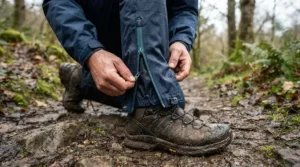
Waterproof Overtrousers vs Traditional Alternatives
It’s worth pausing on why dedicated waterproof overtrousers exist at all when softshell walking trousers and everyday clothing are both cheaper and more comfortable to wear all day.
| Feature | Waterproof Overtrousers | Softshell Walking Trousers | Jeans / Cotton Trousers |
|---|---|---|---|
| Waterproof rating | High (5,000mm-20,000mm+) | Water-resistant only, not waterproof | None — soaks through quickly |
| Breathability in exertion | Good to excellent (technology-dependent) | Excellent | Poor once wet |
| Weight when soaked | Stays roughly the same | Increases noticeably | Increases dramatically |
| Packability | Compresses small, easy to carry | Not designed to be removed on the move | Not applicable |
| Typical price | £20-£120+ | £50-£100 | Already owned |
The crucial difference is what happens once the rain actually starts. Softshell trousers are genuinely pleasant to walk in and shrug off light drizzle, but they’re not waterproof in the way this article defines the term, and in sustained rain they’ll gradually wet through and become heavy. Cotton, including denim, is the worst possible choice for hillwalking: it absorbs water readily, holds it against the skin, and in cold conditions that combination is a real contributor to exposure risk. Waterproof overtrousers exist specifically to be pulled on the moment the weather turns, then stowed again the moment it clears — a role none of the alternatives can properly fill.
Practical Usage Guide: Getting the Most From Your Overtrousers
Buying the right pair is only half the job; using them properly is what actually keeps you dry and comfortable. A few habits make a disproportionate difference.
First, put them on before you’re already wet, not after. It sounds obvious, but the most common mistake new hikers make is waiting until rain is genuinely hammering down before stopping to dig overtrousers out of a rucksack — by which point your regular walking trousers are already soaked, and the waterproof layer over the top is just sealing the damp in. The moment forecasts or the sky suggest sustained rain is imminent, that’s the moment to stop and gear up.
Second, look after the fabric’s water-repellent finish. Even the best hydrostatic head rating won’t stop fabric “wetting out” — where the outer surface soaks up water and stops beading — if the DWR coating has worn thin from repeated washing and wear. A wash in a technical cleaner designed for waterproofs, followed by a warm tumble dry or gentle iron on a low setting (check the label first), reactivates most DWR treatments and restores that satisfying bead-and-roll effect.
Third, mind your zips. Full or three-quarter-length side zips are there for a reason: they let you get overtrousers on and off without removing boots, which matters enormously when you’re stood on a windswept ridge trying not to sit in a puddle. Practise doing this at home before you need to do it for the first time in genuinely miserable conditions.
Real-World Scenarios: Matching Trousers to How You Actually Walk
Specs only mean something once you match them to how you actually spend your weekends. Consider three fairly typical UK walkers.
The casual weekend rambler, walking gentle lowland trails two or three times a month and rarely straying more than a couple of miles from the car, is genuinely well served by something like the Regatta Pack-It Waterproof Overtrousers or Quechua MH500 Waterproof Mountain Walking Over-Trousers. Spending £90 on the Rohan Ventus for this use case would be solving a problem this walker doesn’t really have.
The regular hillwalker, tackling routes across exposed moorland most weekends and covering genuine mileage in variable weather, benefits from the extra durability and breathability of something like the Craghoppers Ascent Overtrousers or Berghaus Paclite Gore-Tex Overtrousers. This is the walker most likely to actually notice the difference between a 5,000mm and a genuinely high-spec fabric.
The fast-and-light hiker or trail runner, covering long distances at pace and generating serious body heat even in cold conditions, is exactly who products like the Rab Downpour Eco Pants and Montane Minimus Waterproof Over-Trousers were designed for. Carrying an extra 200g of fabric matters far more to this walker than it does to someone strolling a two-mile riverside loop.
Problem → Solution: Fixing the Five Things That Go Wrong
Most complaints about waterproof overtrousers trace back to one of a handful of avoidable issues.
Problem: Condensation build-up inside the trousers. This happens when breathability can’t keep pace with how hard you’re working. Solution: slow down slightly on climbs, loosen or open any available vents, or size up to something with a higher breathability rating like the Rohan Ventus Waterproof Overtrousers.
Problem: Water leaking in around the waist. Usually caused by a loose or poorly adjusted waistband rather than a fabric failure. Solution: tighten drawcords fully and tuck your jacket hem over the waistband rather than under it, so gravity works in your favour.
Problem: Fabric “wetting out” despite a good rating. This is a worn DWR coating, not the membrane failing. Solution: reproof with a technical wash-in or spray-on treatment designed for waterproof-breathable fabrics.
Problem: Struggling to get trousers on over muddy boots. Solution: choose a pair with three-quarter or full-length side zips, such as the Berghaus Paclite Gore-Tex Overtrousers or Rab Downpour Eco Pants, rather than a pull-on-only design.
Problem: Overtrousers feel unbearably heavy and bulky to carry. Solution: prioritise weight in your buying decision — the Rab Downpour Eco Pants and Montane Minimus Waterproof Over-Trousers both weigh under 200g and disappear into a jacket pocket.
How to Choose Waterproof Walking Trousers UK Hikers Actually Rate Highly
Choosing the right pair of waterproof walking trousers UK conditions demand comes down to a handful of genuinely important decisions, rather than dozens of marginal ones.
- Decide how exposed your typical walk actually is. A canal towpath and an open Pennine moor call for very different fabric technology.
- Check the hydrostatic head rating, not just the word “waterproof.” Anything below roughly 5,000mm is casual use only; serious hillwalking benefits from 10,000mm or above.
- Weigh breathability as heavily as waterproofing. A trouser that keeps rain out but traps sweat in will leave you just as wet from the inside.
- Try the zip length before committing. Full or three-quarter-length zips make a genuine difference to on-off convenience over boots.
- Match the weight to your activity. Fast, active hiking rewards ultralight fabrics; general hillwalking can tolerate a heavier, more durable build.
- Consider fit over your existing walking trousers. Some overtrousers are cut generously for layering; others are closer-fitting and better worn alone.
- Factor in genuine, verifiable review sentiment, not just star ratings, since aggregated written feedback often reveals fit or durability issues a number alone won’t.
Lightweight Hiking Rain Trousers vs Heavy-Duty Overtrousers
There’s a genuine trade-off here, and it’s worth being honest about it rather than pretending one category is simply “better.” Lightweight hiking rain trousers, such as the Rab Downpour Eco Pants and Montane Minimus Waterproof Over-Trousers, use thinner face fabrics (typically 15-20 denier) to shave weight, which means less carried bulk but reduced resistance to abrasion from rock scrambles, bramble-lined paths or careless packing next to sharp objects.
Heavy-duty overtrousers, represented here by the Craghoppers Ascent Overtrousers, use thicker 40-denier-plus fabrics that shrug off rough treatment far better, at the cost of an extra 100-150g in the rucksack. Based on the spec comparison, the honest answer is that neither category is objectively superior — a trail runner covering 20 miles will feel every extra gram, while a rambler doing gentle three-mile loops will barely notice weight but might appreciate the extra durability margin. What most buyers overlook is that lightweight fabric isn’t automatically less waterproof; the Rab Downpour Eco Pants post genuinely excellent breathability figures despite weighing a fraction of heavier rivals.
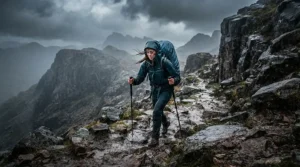
Breathable Hiking Overtrousers: Why Sweat Is the Real Enemy
It’s a genuinely counterintuitive fact that most people who end up wet on a hillwalk got wet from the inside, not the outside. Breathable hiking overtrousers work by letting water vapour (sweat, essentially) escape through microscopic pores in the membrane that are too small for liquid water to pass back through — the same underlying principle used across the waterproof-breathable fabric category that includes Gore-Tex, Pertex Shield and Rohan’s own Barricade laminate.
Manufacturers measure this with a moisture vapour transmission rate (MVTR), expressed in grams of water vapour per square metre per day. Reviewers consistently note that fabrics posting figures around 20,000-25,000g, like those used in the Rohan Ventus Waterproof Overtrousers and Rab Downpour Eco Pants, feel noticeably less clammy during sustained climbs than budget fabrics sitting closer to 5,000g. What the spec sheet won’t tell you is that breathability drops off in humid conditions regardless of fabric quality, simply because there’s less of a vapour-pressure gradient pushing moisture outward — a physical limitation no amount of clever engineering fully escapes.
Rucksack Compatibility: Side Zips, Hip Belts and Getting Dressed Mid-Storm
Rucksack compatibility is one of those details that never appears on a product listing but matters enormously in practice. Getting waterproof trousers on or off while wearing a loaded rucksack, particularly one with a hip belt already fastened, is far harder than doing it in a shop changing room.
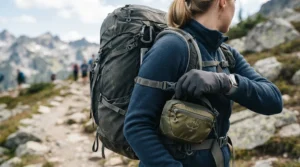
Here’s what most buyers overlook about rucksack compatibility: it isn’t really about the trousers touching the pack at all, it’s about zip length and access. Three-quarter or full-length side zips, as fitted to the Berghaus Paclite Gore-Tex Overtrousers and Rab Downpour Eco Pants, let you step into overtrousers without removing boots, gaiters or a rucksack hip belt, because the zip opens wide enough to pass your whole foot and boot through sideways. Shorter, quarter-length zips like those on the Montane Minimus Waterproof Over-Trousers are lighter but genuinely more fiddly under exactly these conditions, which is a fair trade for a trail runner carrying a small vest pack but a real annoyance for anyone hiking with a heavier overnight load.
A second, smaller consideration: packability. Overtrousers that compress into their own stuff sack, rather than needing to be stuffed loose into a rucksack lid, are easier to retrieve quickly without unpacking half your kit onto wet ground — a genuinely underrated convenience on an exposed ridge in driving rain.
Peak District Weather Gear: What the Moors Actually Throw at You
If you’re buying Peak District weather gear specifically, it’s worth understanding exactly what the terrain does to forecasts. Kinder Scout, the highest point in the Peak District at 636 metres, and the surrounding gritstone moorland create genuinely localised weather that can differ dramatically from conditions in the valleys below — the Met Office’s dedicated Peak District mountain forecast exists precisely because standard town forecasts routinely underestimate wind, rain and visibility at altitude on open moorland like this.
That combination of exposed, featureless plateau and fast-changing conditions means Peak District weather gear needs to cope with sideways rain driven by strong, unbroken wind, not just vertical drizzle. A three-quarter or full-length side zip becomes genuinely important here, because stopping to change layers on an exposed section like Bleaklow or the Kinder plateau, with nowhere to shelter, rewards speed and simplicity. The Peak District National Park Authority itself notes that weather conditions across its trails and open access land can change quickly with limited phone signal in places, which is exactly the kind of environment where a reliable, quick-access waterproof layer stops being a nice-to-have and becomes genuinely important kit.
For Peak District day walks, something with a genuinely high hydrostatic head and dependable breathability, like the Rohan Ventus Waterproof Overtrousers or Craghoppers Ascent Overtrousers, tends to be a better match than the lightest possible option, simply because you may be exposed to sustained weather for several hours with limited opportunity to shelter and reassess.
Common Mistakes When Buying Waterproof Trousers
A handful of buying mistakes come up again and again in aggregated review commentary and gear-shop conversations alike.
Buying on price alone, without checking the hydrostatic head rating, is probably the most common error — a £15 pair and a £90 pair can look nearly identical in a product photo while performing very differently in genuine mountain weather. Ignoring sizing charts is another frequent misstep; overtrousers are typically cut to layer over existing walking trousers, so buying your “normal” size can result in a garment that’s uncomfortably tight rather than a useful outer layer.
A third common mistake is neglecting maintenance entirely, then blaming the product when a two-year-old pair starts to wet through — as covered above, this is very often a worn DWR coating rather than genuine fabric failure, and it’s fixable at home for a few pounds. Finally, plenty of buyers assume water-resistant and waterproof mean the same thing; a softshell trouser marketed as “water-resistant” will handle drizzle but is not designed for sustained rain in the way a genuinely waterproof-rated fabric is.
Long-Term Cost & Maintenance
Thinking in terms of cost-per-wear changes the value calculation considerably. A £25 pair of budget overtrousers that needs replacing every season because the coating fails works out more expensive over three years than a £90 pair that, properly maintained, lasts five or six seasons of regular use.
Maintenance costs are genuinely modest: a bottle of technical wash-in waterproofing treatment typically covers several washes and costs a fraction of a new garment. Reproofing every six to twelve months of regular use, depending on how often the trousers are washed and worn, is generally enough to keep the DWR coating performing well. Over the total cost of ownership, investing in a mid-range or premium pair like the Craghoppers Ascent Overtrousers or Rab Downpour Eco Pants, combined with basic care, tends to work out cheaper per year of use than repeatedly replacing budget options that fail after a season or two of regular hillwalking.
Frequently Asked Questions
❓ What's the difference between hiking waterproof trousers and regular waterproof trousers?
❓ Are waterproof overtrousers better than waterproof walking trousers worn all day?
❓ How waterproof should hiking trousers be for the Peak District?
❓ Can I wear waterproof overtrousers over jeans?
❓ How much should I spend on hiking waterproof trousers?
Conclusion
The right pair of hiking waterproof trousers isn’t necessarily the most expensive one, or the one with the flashiest fabric name printed on the label — it’s the one that matches how often you actually walk, how exposed your usual routes are, and how much weight you’re genuinely willing to carry. For occasional dog walks and gentle family rambles, the Regatta Pack-It Waterproof Overtrousers or Quechua MH500 Waterproof Mountain Walking Over-Trousers do everything most people will ever ask of them, at a price that makes the decision almost trivial.
Step up to regular weekend hillwalking across exposed moorland, and the extra investment in the Craghoppers Ascent Overtrousers, Berghaus Paclite Gore-Tex Overtrousers or Rohan Ventus Waterproof Overtrousers starts to pay for itself in genuine comfort and reliability rather than marginal bragging rights. And for anyone covering serious distance at pace, whether trail running or fastpacking, the Rab Downpour Eco Pants and Montane Minimus Waterproof Over-Trousers prove that ultralight and genuinely waterproof no longer have to be mutually exclusive.
Whatever you choose, remember that even the best fabric in the world needs basic care — a reproofing wash now and then will do more for long-term performance than any single spec on a listing page. Stay dry out there, and enjoy the walk regardless of what the sky decides to do.
Recommended for You
- Rain Trousers General Purpose: 7 Best Picks For UK Rain (2026)
- Women’s Waterproof Trousers: 7 Best Rainproof Picks UK (2026)
- Men’s Waterproof Trousers: 7 Best UK Picks That Won’t Let You Down (2026)
Disclaimer: This article contains affiliate links. As an Amazon Associate, I earn from qualifying purchases. If you purchase products through these links, we may earn a small commission at no additional cost to you.
✨ Found this helpful? Share it with your friends! 💬🤗
