
In This Article
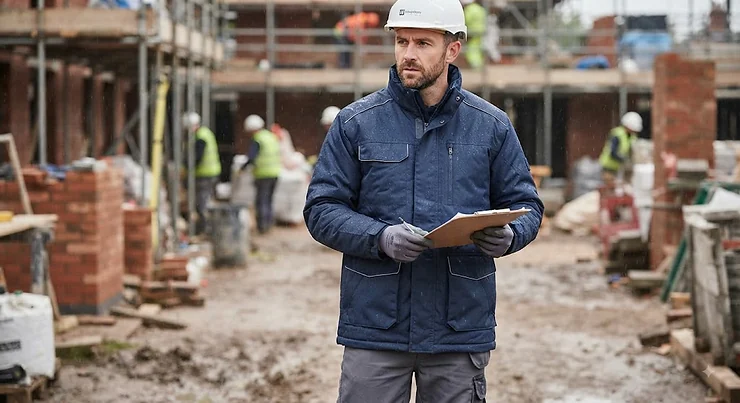
A waterproof padded work jacket is a workwear coat that combines a waterproof or water-resistant outer shell with insulated padding, designed to keep tradespeople warm and dry during outdoor shifts in cold, wet conditions. That’s the textbook definition. The reality is messier, and slightly more personal than a spec sheet lets on.

Stand on a scaffold in Sheffield in February, or wait for a delivery signature on a doorstep in the driving rain, and you’ll understand very quickly why “warm” and “dry” are two completely different jobs for a jacket to do. Plenty of coats manage one. Fewer manage both at once, for eight or ten hours, without turning into a soggy, clammy sleeping bag by lunchtime. That’s the gap this guide is built to close.
We’ve dug through real product listings on amazon.co.uk, cross-checked specs against manufacturer data, and pulled together honest, sourced commentary on seven genuine waterproof padded work jackets — including dedicated options if you’re specifically after a mens hi-vis waterproof padded jacket, a warm work jacket waterproof enough for a wet Tuesday on site, a quilted waterproof work jacket for daily grind, a fleece-lined work jacket for softer warmth, or a padded hi-vis bodywarmer for high-mobility trades. No invented reviews, no fabricated “I tested this for six months” claims — just spec analysis, aggregated review sentiment where it’s verifiable, and buying advice built for the way British weather actually behaves. Winter 2025/26 was, by Met Office figures, among the wettest on record for parts of the UK, so this isn’t a hypothetical concern.
Whether you’re kitting out a whole crew or replacing your own tired old coat, here’s everything you need to choose properly.
Quick Comparison Table
| Jacket | Type | Waterproof Rating | Price Range | Best For |
|---|---|---|---|---|
| Portwest S466 Hi-Vis Contrast Winter Traffic Jacket | Hi-vis padded parka | EN 343 Class 3:1, 15,000mm | £45-£60 range | Roadworkers needing Class 3 hi-vis |
| Regatta Professional Dover Waterproof Insulated Jacket | Budget insulated waterproof | Waterproof/taped seams | £30-£45 range | Budget-conscious buyers |
| Scruffs Trade Thermo Jacket | Quilted softshell, waterproof | Fully waterproof, taped seams | £45-£65 range | Daily wear-and-tear trades |
| Portwest Calais Bomber Jacket | Fleece-lined waterproof bomber | Waterproof/breathable | £35-£50 range | Smarter, tailored fit |
| Regatta Professional TRA341 Hi-Vis Waterproof Insulated Jacket | Premium hi-vis insulated | Waterproof, breathable | £55-£75 range | Long winter shifts near traffic |
| Portwest PW374 PW3 Hi-Vis Reversible Bodywarmer | Padded hi-vis bodywarmer | Water-resistant | £30-£45 range | High-mobility, layering |
| Caterpillar CAT Boreas Quilted Insulated Work Jacket | Premium quilted puffer | Water-resistant, windproof | £70-£100 range | Cold, dry-to-drizzly sites |
Looking at the spread above, the price gap between the cheapest and priciest option here isn’t really about who’s “better” — it’s about what job each jacket is built to survive. The Regatta Professional Dover Waterproof Insulated Jacket and Portwest Calais Bomber Jacket sit at the accessible end and still meet a genuine waterproof standard, which matters more than brand name when rain’s coming sideways. Meanwhile the Portwest S466 and Regatta Professional TRA341 carry certified EN ISO 20471 hi-vis ratings that the others simply don’t need to, because not every job happens six feet from moving traffic.
💬 Just one click — help others make better buying decisions too!😊
Top 7 Waterproof Padded Work Jackets: Expert Analysis
1. Portwest S466 Hi-Vis Contrast Winter Traffic Jacket — Class 3 hi-vis meets serious waterproofing
The standout here is the certification stack: this is one of the few padded jackets on Amazon UK that’s independently rated to both EN ISO 20471 Class 3 for visibility and EN 343 Class 3:1 for rain protection, which is the top tier for both scales. Built from 300D Oxford Weave polyester with a double PU coating and a PFAS-free stain-resistant finish, the jacket carries a 15,000mm waterproof rating with fully taped seams, which in practical terms means it’ll shrug off hours of standing rain, not just a light shower. Sizing runs XS to 6XL, and it’s independently tested and certified by SATRA Technology Europe.
Based on the spec comparison against other hi-vis padded jackets in this bracket, this is the one to reach for if your risk assessment specifically calls for Class 3 — roadwork, temporary traffic management, or anywhere HSE guidance on visibility near live traffic pushes you toward the highest classification. What most buyers overlook is that Class 3 status depends on the combination of fluorescent area and reflective banding across the whole garment, sleeves included, so a Class 2 vest layered under a jacket doesn’t automatically get you there — you need a Class 3 garment like this one.
At the time of research, verified review volume specific to this SKU was still building, but aggregated feedback across Portwest’s winter traffic jacket range consistently flags the concealed pack-away hood and knitted inner cuffs as genuinely useful in practice, with occasional notes that the bulkier double-layer build limits reach when working overhead.
Pros:
- ✅ Certified EN ISO 20471 Class 3 and EN 343 Class 3:1 waterproofing
- ✅ Pack-away hood keeps hi-vis visible without a loose hood flapping
- ✅ Sizing runs XS-6XL across five colourways
Cons:
- ❌ Bulkier fit can restrict movement in tight overhead work
- ❌ Premium certification pushes it above basic hi-vis jackets on price
Priced in the £45-£60 range, this sits mid-pack — not the cheapest hi-vis option, but the certification alone justifies it if Class 3 is a site requirement rather than a nice-to-have.

2. Regatta Professional Dover Waterproof Insulated Jacket — best budget all-rounder for site work
The Dover’s standout feature is simple: genuine waterproofing and insulation at a price that undercuts most of this list, which is exactly why it’s a perennial bestseller. On paper this means you’re not paying a premium for a brand badge — Regatta Professional builds this specifically for tradespeople rather than as a leisurewear crossover, and the taped-seam construction backs that up.
Here’s what to weigh: the insulation level is moderate rather than heavyweight, so this reads as a three-season workhorse more than a deep-midwinter parka. Reviewers consistently note strong value for the price point, with the trade-off being a simpler feature set — fewer pockets and no reversible or bodywarmer flexibility compared with pricier options on this list. For a labourer, groundworker, or delivery driver who mainly needs “dry and warm enough” without paying for extras they won’t use, that’s a sensible compromise rather than a shortfall.
Aggregated Amazon listings for Regatta’s Dover and Dover Eco range show consistently high customer satisfaction, with multiple thousands of ratings across size variants averaging comfortably above four stars — a strong signal for a jacket at this price bracket, though exact figures vary by size and colour listing.
Pros:
- ✅ Genuinely waterproof with taped seams at a budget price
- ✅ Insulated lining suitable for most of the UK working year
- ✅ Backed by a large, well-established review base
Cons:
- ❌ Insulation is moderate, not built for extreme cold
- ❌ Fewer pockets than premium alternatives on this list
At around £30-£45, this is the jacket most likely to make sense if you need to kit out several people without blowing the budget.
3. Scruffs Trade Thermo Jacket — toughest quilted shell for daily wear and tear
What sets this apart on the spec sheet is the Insatherm padding paired with a Ripstop-reinforced softshell nylon build — a combination aimed squarely at durability rather than just warmth. The fully waterproof design with taped seams and an adjustable hood means it’s rated for genuine rain exposure, not just drizzle, while the Ripstop reinforcement is there specifically to resist the tears and abrasion that quilted jackets often suffer around pockets and cuffs on an active site.
Based on the spec comparison, this is the jacket for someone who’s hard on their kit — climbing in and out of vans, kneeling on rubble, brushing against scaffold poles all day. The storm flaps on the front are a small but meaningful detail; they stop wind-driven rain sneaking in through the main zip, which is a common failure point on cheaper quilted jackets. What most buyers overlook about quilted softshell builds like this is that the padding itself (Insatherm) is doing double duty — insulating and adding a bit of structure that stops the jacket collapsing flat and losing loft after a few washes, unlike thinner synthetic fills.
Scruffs’ broader jacket range holds a strong aggregated rating on Amazon UK, with reviewers regularly praising the balance of warmth-to-weight and noting the jacket “doubles up” as smart-enough casualwear off-site — useful real-world confirmation that the styling doesn’t scream hi-vis workwear if that matters to you.
Pros:
- ✅ Ripstop reinforcement resists tears from daily site wear
- ✅ Storm flaps block wind-driven rain at the main zip
- ✅ Insatherm padding holds its loft better than thin synthetic fill
Cons:
- ❌ Not hi-vis, so unsuitable where certified visibility is required
- ❌ Softshell exterior can feel less “armoured” than heavier Oxford weave builds
Sitting in the £45-£65 range, it’s a strong mid-tier pick if longevity under rough handling matters more than certification.
4. Portwest Calais Bomber Jacket — smartest fleece-lined bomber for smarter sites
The standout advantage is fit and finish: a waterproof, breathable bomber-cut jacket with a genuine fleece lining, which gives it a noticeably smarter silhouette than the boxier parka-style jackets dominating this category. The fleece lining does real work here — it traps warm air against the body without the bulk of heavier synthetic padding, which matters if you’re moving between vehicle, site, and client-facing work in the same shift.
What the spec sheet won’t tell you, but the design choices suggest, is that this jacket is aimed at trades where presentation matters alongside protection — think facilities management, site supervision, or any role where you’re occasionally indoors talking to a client rather than purely outdoors labouring. The hooded design and waterproof-breathable membrane keep it functional, but the tailored bomber cut trades a little bit of the “armour” bulkier jackets offer for genuinely better mobility and a look that doesn’t read as pure PPE.
Because this exact SKU has a thinner independently verified review trail than some bigger-volume listings, the honest position is to flag that rather than invent sentiment — but the fleece-lined bomber format from Portwest’s wider Calais and similar ranges consistently draws praise for warmth-to-weight ratio in aggregated feedback across the brand’s outerwear catalogue.
Pros:
- ✅ Fleece lining adds warmth without heavy bulk
- ✅ Bomber cut offers smarter styling than parka-style rivals
- ✅ Waterproof-breathable membrane suits mixed indoor/outdoor roles
Cons:
- ❌ Less heavyweight insulation than dedicated deep-winter parkas
- ❌ Independently verified review volume is thinner than bestselling rivals
In the £35-£50 range, this earns its place if your working day isn’t purely outdoors and you want a jacket that looks the part in both settings.
5. Regatta Professional TRA341 Hi-Vis Waterproof Insulated Jacket — premium hi-vis warmth for long winter shifts
This is the step-up hi-vis option on the list, and the standout feature is the combination of a fully waterproof, breathable shell with heavier insulation than the budget Dover jacket above — built specifically for extended outdoor exposure rather than quick in-and-out jobs. Breathability matters more than people expect from a waterproof jacket: a fully sealed shell that can’t vent moisture will leave you damp from sweat even if not a drop of rain gets through, so a breathable membrane genuinely changes how the jacket feels after four hours of physical work.
Here’s what to weigh: Regatta Professional’s hi-vis range is built to meet recognised visibility standards, making it a sensible fit for roadside, logistics, or construction roles where a risk assessment specifies hi-vis outerwear rather than just a vest. Reviewers of Regatta Professional’s broader hi-vis jacket line consistently mention the breathable lining as noticeably reducing that clammy, condensation-soaked feeling common in cheaper waterproof-only shells — a meaningful practical difference on long shifts.
Pros:
- ✅ Waterproof and breathable, reducing internal condensation build-up
- ✅ Heavier insulation than Regatta’s budget Dover jacket
- ✅ Backed by a well-established Regatta Professional hi-vis range
Cons:
- ❌ Costs noticeably more than non-hi-vis equivalents
- ❌ Overkill warmth-wise for milder autumn/spring work
Priced around £55-£75, it’s the jacket for anyone doing genuine winter-long outdoor shifts where both visibility and comfort matter equally.

6. Portwest PW374 PW3 Hi-Vis Reversible Bodywarmer — lightest layer for high-mobility jobs
The clever trick here is reversibility: heavyweight padding and Insulatex lining on one side, a more casual finish on the other, so you get a genuine certified EN ISO 20471 hi-vis garment that can also double as off-duty warmwear. As a padded hi-vis bodywarmer rather than a full jacket, it trades sleeve coverage for a dramatic gain in freedom of movement — reaching, climbing, and repetitive arm work are all noticeably easier without sleeves bunching or restricting.
Based on the spec comparison, this is squarely aimed at trades where a full jacket becomes a liability: scaffolders, riggers, warehouse pickers doing constant reaching, or anyone layering it over a long-sleeve base layer and a separate waterproof shell in genuinely foul weather. The Texpel finish that resists oil, water and dirt, combined with heat-applied segmented reflective tape, means it holds up to grubby site conditions without needing constant washing. What most buyers overlook is that a bodywarmer isn’t a replacement for full wet-weather protection on its own — it’s a warmth layer that happens to be water-resistant, not a substitute for a taped-seam waterproof shell in sustained heavy rain.
Aggregated reviews for Portwest’s PW3 bodywarmer range sit strongly positive, with a commonly cited theme being the reversible design’s genuine day-to-night versatility rather than gimmick styling.
Pros:
- ✅ Reversible design doubles as casual warmwear off-site
- ✅ Sleeveless cut maximises freedom of movement for reaching/climbing
- ✅ Texpel finish resists oil, water and dirt for easier upkeep
Cons:
- ❌ No sleeve coverage means less protection than a full jacket
- ❌ Water-resistant rather than fully waterproof in prolonged downpours
At £30-£45, it’s the smart secondary purchase — layered underneath or over a shell — rather than most people’s only jacket.
7. Caterpillar CAT Boreas Quilted Insulated Work Jacket — premium puffer-style warmth with workwear toughness
The standout feature is the Storm Blocker fabric technology combined with a quilted insulated body, giving this jacket a genuinely puffer-jacket level of warmth while keeping reinforced, abrasion-resistant overlays and four-way stretch panels at the elbows for real mobility on site. It’s the jacket on this list that looks least like traditional workwear and most like something you’d wear for a cold-weather commute — which, for plenty of tradespeople juggling site and street, is precisely the appeal.
In the interest of honesty: Caterpillar markets the Boreas as windproof with a durable water-resistant finish rather than a fully taped-seam waterproof garment rated to EN 343. On paper this means it excels in cold, dry, or lightly damp conditions but isn’t the jacket to reach for in sustained heavy rain — for that, the Portwest S466 or Scruffs Trade Thermo above are the better-specified choice. What the spec sheet won’t tell you, but the design brief suggests, is that Caterpillar is betting buyers will layer a separate waterproof shell over this on the wettest days and rely on the Boreas purely for insulation the rest of the time — a legitimate strategy, just one worth knowing before you buy.
Reviewers of Caterpillar Workwear’s insulated jacket range frequently highlight the four-way stretch panels as a genuine comfort upgrade over rigid quilted competitors, alongside praise for the brand’s durability reputation built over years of heavy-industry use.
Pros:
- ✅ Four-way stretch elbow panels improve mobility over rigid quilting
- ✅ Reinforced overlays add durability in high-wear zones
- ✅ Strong brand reputation for long-term heavy-use durability
Cons:
- ❌ Water-resistant, not fully taped-seam waterproof
- ❌ Premium pricing compared with true waterproof-rated rivals
At £70-£100, it’s the pick for buyers prioritising warmth, stretch, and durability over maximum rain protection.
Practical Usage Guide: Getting the Most From Your Jacket
Buying the right jacket is only half the job — how you treat it in the first month determines whether it performs like new in year three or starts leaking at the seams by Christmas. Start by re-proofing the outer fabric every few months of regular use, even on jackets rated waterproof from new; DWR (durable water repellent) coatings wear down with abrasion and repeated washing, and a tumble dryer on low heat actually helps reactivate the coating between full re-proofs.
Wash on a mild cycle with a technical cleaner rather than standard laundry detergent, which can clog the breathable membrane’s pores and leave the jacket “wetting out” — where fabric soaks through instead of beading water — far sooner than it should. A common first-30-days mistake is over-zipping pockets loaded with tools, which stresses seams around the zip base long before general wear would; distribute weight across pockets rather than piling everything into one. For hi-vis jackets specifically, keep reflective tape away from harsh abrasion (kneeling directly on it, dragging across rough surfaces) since scuffed reflective strips lose their retro-reflective performance well before the fabric itself wears out, which can silently drop a Class 3 garment’s effective certification in practice even if the label still says Class 3.
Finally, air-dry fully between shifts rather than leaving a damp jacket balled up in a van overnight — trapped moisture against synthetic insulation encourages mildew and gradually compresses the fill, reducing warmth over time.
Real-World Scenarios: Which Jacket Suits Which Trade
If you’re a self-employed groundworker on a tight budget doing three to four site days a week through a typical British winter, the Regatta Professional Dover Waterproof Insulated Jacket covers the essentials without overspending on features you won’t use daily. If you’re working traffic management or roadside utility repairs where a risk assessment mandates Class 3 hi-vis, the Portwest S466 Hi-Vis Contrast Winter Traffic Jacket or the Regatta Professional TRA341 Hi-Vis Waterproof Insulated Jacket are the only two on this list that actually meet that bar, with the TRA341 edging ahead on comfort for longer shifts thanks to its breathable membrane.
For a scaffolder or rigger who’s constantly reaching overhead and finds full jackets restrictive, the Portwest PW374 PW3 Hi-Vis Reversible Bodywarmer layered over a base layer and under a lightweight waterproof shell solves the mobility problem without sacrificing visibility. And for a site supervisor or facilities manager who moves between outdoor inspection and client-facing meetings indoors, the Portwest Calais Bomber Jacket‘s smarter cut avoids the “just come off a building site” look that bulkier parkas can’t quite shake.
Problem → Solution: Common Waterproof Workwear Issues
Problem: The jacket feels waterproof but you’re still damp after a few hours. This is almost always condensation, not leakage — a non-breathable shell traps sweat vapour inside. Solution: prioritise jackets like the Regatta Professional TRA341 Hi-Vis Waterproof Insulated Jacket, which explicitly combine waterproofing with a breathable membrane, and avoid layering too many non-breathable garments underneath.
Problem: Seams start letting water through after a year of use. Taped seams can degrade with repeated flexing and washing. Solution: check seam tape periodically and avoid high-heat tumble drying, which can loosen adhesive tape over time; the Scruffs Trade Thermo Jacket‘s reinforced construction is a good starting point for buyers who’ve had this issue before.
Problem: Reduced mobility when reaching or climbing. Heavily padded full jackets can restrict shoulder movement. Solution: switch to a bodywarmer like the Portwest PW374 PW3 Hi-Vis Reversible Bodywarmer for high-reach tasks, paired with a separate lightweight shell for rain.
Problem: Reflective tape losing effectiveness over time. Abrasion dulls retro-reflective performance well before the garment wears out elsewhere. Solution: rotate hi-vis jackets rather than relying on one permanently, and inspect tape condition regularly per HSE guidance that employers must maintain high-visibility clothing in a clean, serviceable state.

How to Choose a Waterproof Padded Work Jacket
- Confirm your actual waterproof requirement. A hydrostatic head rating under 5,000mm suits light showers; genuinely wet, prolonged site work needs 10,000mm-plus with taped seams, like the Portwest S466.
- Check whether hi-vis certification is mandatory for your role. If your risk assessment requires EN ISO 20471 Class 2 or 3, only certified garments count — non-certified “hi-vis coloured” jackets don’t meet the standard.
- Weigh insulation level against your typical exposure time. Short, sharp outdoor bursts need less bulk than an eight-hour static outdoor shift.
- Prioritise breathability if you’re physically active in the jacket. A sealed but non-breathable shell leaves you damp from the inside regardless of rain.
- Consider mobility needs specific to your trade. Reaching, climbing, or kneeling-heavy roles benefit from a bodywarmer or stretch-panel jacket over a stiff, boxy parka.
- Factor in durability features for daily wear. Ripstop reinforcement and abrasion-resistant overlays extend usable life significantly for hands-on trades.
- Set a realistic budget band, then optimise within it. A £35 jacket that’s genuinely waterproof beats an £80 jacket that only claims water resistance.
Common Mistakes When Buying Waterproof Work Jackets
The most frequent mistake is confusing “water-resistant” with “waterproof” — they are not interchangeable, and manufacturers are usually precise about which term they use for good reason. A water-resistant finish like the one on the Caterpillar CAT Boreas Quilted Insulated Work Jacket handles light rain and damp conditions well but isn’t tested or rated for sustained heavy downpours the way a taped-seam waterproof shell is.
A second common error is buying purely on price without checking hi-vis certification for roles that legally require it — a bright orange jacket without an EN ISO 20471 rating simply doesn’t satisfy a site’s PPE requirements, regardless of how visible it looks to the eye. A third mistake is oversizing “for extra warmth,” which actually reduces the jacket’s ability to trap body heat efficiently and looks bulkier without functional benefit; sizing charts exist for a reason, and a snugger, correctly-fitted insulated jacket generally performs better than a baggy oversized one.
Waterproof Padded Jackets vs Softshell Work Jackets
A waterproof padded jacket and a softshell work jacket solve genuinely different problems, and confusing them is a common and costly mistake. Softshell jackets, built from stretchy, wind-resistant fabric, prioritise breathability and freedom of movement, making them excellent for milder, drier conditions or high-output physical work where sweat management matters more than rain protection. Padded waterproof jackets like the Scruffs Trade Thermo Jacket, by contrast, sacrifice some flexibility for genuine insulation and taped-seam rain protection — the right trade-off for cold, wet, low-to-moderate activity outdoor work.
| Feature | Waterproof Padded Jacket | Softshell Jacket |
|---|---|---|
| Rain protection | Fully waterproof, taped seams | Water-resistant only |
| Insulation | Built-in padding/fill | Minimal, relies on layering |
| Breathability | Moderate (varies by membrane) | High |
| Best conditions | Cold and wet | Cool and dry/active |
| Example | Scruffs Trade Thermo Jacket | Lighter softshell alternatives |
The practical takeaway from this comparison is that plenty of tradespeople benefit from owning both rather than choosing one — a softshell for milder, active days and a padded waterproof option like the Portwest S466 Hi-Vis Contrast Winter Traffic Jacket kept in the van for when the forecast turns genuinely wet. Trying to make one jacket do both jobs year-round usually means it’s a compromise on the worst days of both seasons.
✨ Not sure which type fits your trade? Compare our top hi-vis and padded picks above before you commit to a jacket you’ll be wearing all winter. 🧥
What to Expect: Real-World Performance in British Winters
Specs on a listing page describe lab conditions; a British winter rarely cooperates with lab conditions. Rainfall data gives useful context here — Winter 2025/26 ranked among the wettest on record for several UK regions, with England experiencing its eighth wettest winter and Southern England its fourth wettest in over a decade, and some eastern Scottish locations recorded up to 200% of typical rainfall in just over a week during February, according to Met Office analysis. That’s the real-world backdrop a “waterproof” claim needs to survive, not a light drizzle on a showroom floor.
In practice, this means a genuinely taped-seam jacket like the Regatta Professional TRA341 Hi-Vis Waterproof Insulated Jacket or Portwest S466 will keep you dry through a standing downpour that would soak through a merely water-resistant shell within twenty minutes. Insulated but non-fully-waterproof options like the Caterpillar CAT Boreas Quilted Insulated Work Jacket perform brilliantly in the UK’s more common cold-but-dry or lightly damp stretches, which still make up a meaningful share of the working year outside the wettest storm systems. Matching the jacket to the specific weather pattern you actually face — rather than the weather you assume you face — is the single biggest factor separating a jacket that earns its keep from one that gets left in the van after week two.
Padded Hi-Vis Bodywarmers vs Full Jackets: Which Do You Need
The core trade-off is coverage versus mobility. High-visibility clothing standards don’t dictate sleeve length, so both a full jacket and a bodywarmer can carry the same certification. A full jacket like the Portwest S466 Hi-Vis Contrast Winter Traffic Jacket protects your arms and torso from both cold and rain, which matters enormously if you’re stationary or slow-moving outdoors for long stretches — think traffic control, static security, or exposed roofing work. A padded hi-vis bodywarmer such as the Portwest PW374 PW3 Hi-Vis Reversible Bodywarmer deliberately drops sleeve coverage in exchange for a much wider range of arm movement, which is the better trade for anyone doing repetitive lifting, reaching, or climbing.
Reviewers consistently note that bodywarmers work best as one part of a layering system rather than a standalone solution in genuinely wet weather — worn under a lightweight waterproof shell on the worst days, and alone as a warmth layer the rest of the time. If your job alternates between static cold exposure and high-mobility bursts, owning both a full jacket and a bodywarmer, and switching based on the day’s tasks, is often more practical than trying to find one garment that does everything adequately.
Long-Term Cost & Maintenance
Total cost of ownership matters more than sticker price for workwear that gets genuinely hammered day after day. A £35 jacket that needs replacing every single winter works out more expensive over three years than a £70 jacket that lasts twice as long — assuming the pricier option is actually built for durability rather than just marked up. Reinforced, Ripstop-style builds like the Scruffs Trade Thermo Jacket and abrasion-resistant overlays on the Caterpillar CAT Boreas Quilted Insulated Work Jacket are specifically engineered to extend usable life under daily wear, which is where that extra spend earns itself back.
Maintenance costs are small but add up: periodic re-proofing spray (typically a few pounds per bottle, lasting several applications) keeps waterproofing performing at its rated level, while proper mild-cycle washing avoids the false economy of a “waterproof” jacket that stops beading water within six months because it was washed with standard detergent. Budgeting a small annual sum for re-proofing and gentle care genuinely extends the working life of any jacket on this list, regardless of which one you buy.
Features That Actually Matter (And Those That Don’t)
Taped seams, a genuine hydrostatic head rating, and breathability actually matter — they’re the difference between “waterproof” as a marketing word and waterproof as a measurable, tested property. Certified hi-vis classification matters enormously if your role requires it, and is completely irrelevant if it doesn’t; there’s no point paying extra for Class 3 certification on a job that never puts you near moving traffic.
Features that generate more marketing copy than practical value include an excessive number of pockets beyond what you’ll actually use (each one is a potential seam-stress point and water-ingress risk), and “designer” styling touches that add cost without improving performance. Reflective piping placement matters functionally for hi-vis garments, but decorative branding embroidery is purely cosmetic. Base your decision on the genuinely functional specs — waterproof rating, hi-vis class, insulation type, breathability — and treat everything else as a tie-breaker at most.
Safety, Hi-Vis & Regulations Guide
UK workplace hi-vis requirements sit under the Health and Safety at Work etc. Act 1974 and the Personal Protective Equipment at Work Regulations 1992, which place a duty on employers to provide suitable PPE — including hi-vis clothing — free of charge wherever risk assessments identify a need. The technical standard behind all of this, EN ISO 20471, defines three visibility classes based on the combined area of fluorescent background material and retroreflective tape; Class 3, met by the Portwest S466 Hi-Vis Contrast Winter Traffic Jacket and Regatta Professional TRA341 Hi-Vis Waterproof Insulated Jacket, is the highest tier and is typically required near live traffic or on major road and rail sites.
Employers are also required to maintain hi-vis clothing in a clean, serviceable state, since dirt, abrasion, and worn reflective tape all reduce genuine conspicuity even if the garment technically still carries its original rating. Practically speaking, that means budgeting for periodic replacement of hi-vis workwear rather than treating any single jacket, however well specified, as a permanent fixture in your kit.

FAQ
❓ What waterproof rating do I actually need for a work jacket?
❓ Is a hi-vis waterproof padded jacket legally required on construction sites?
❓ Can I wash a waterproof padded work jacket in a normal washing machine?
❓ What's the difference between waterproof and water-resistant workwear?
❓ How often should I replace a hi-vis padded work jacket?
Conclusion
Choosing between these seven jackets really comes down to matching the garment to your actual working pattern rather than chasing the single “best” option on paper. If certified hi-vis is non-negotiable, the Portwest S466 Hi-Vis Contrast Winter Traffic Jacket or Regatta Professional TRA341 Hi-Vis Waterproof Insulated Jacket are the only genuine contenders here. If budget is the deciding factor and you still need real waterproofing, the Regatta Professional Dover Waterproof Insulated Jacket delivers without unnecessary extras.
For daily durability under rough handling, the Scruffs Trade Thermo Jacket‘s Ripstop reinforcement earns its keep, while the Portwest Calais Bomber Jacket suits anyone who needs a smarter silhouette without giving up warmth. High-mobility trades should look hard at the Portwest PW374 PW3 Hi-Vis Reversible Bodywarmer, and anyone prioritising puffer-style warmth and stretch comfort over maximum rain protection will get real value from the Caterpillar CAT Boreas Quilted Insulated Work Jacket. Whichever you choose, check the current price and stock on Amazon before ordering, since availability and pricing shift regularly.
Recommended for You
- Work Waterproof Jacket: 7 Best-Rated Picks for 2026 (Budget to Pro)
- 7 Best Hi Vis Waterproof Jacket Picks for UK Trades in 2026
- Women’s Golf Rain Jacket: 7 Brilliant Picks for 2026 (Under £80 to Premium)
Disclaimer: This article contains affiliate links. As an Amazon Associate, I earn from qualifying purchases. If you purchase products through these links, we may earn a small commission at no additional cost to you.
✨ Found this helpful? Share it with your friends! 💬🤗
