In This Article
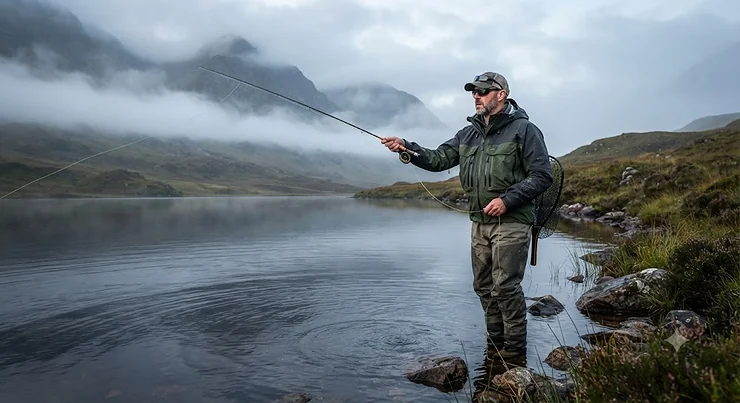
There’s a very specific kind of misery reserved for anglers: the moment cold water finds a gap at your collar and trickles, slow and deliberate, all the way down your spine. It always seems to happen forty minutes from the car. A decent mens fishing rain jacket is the one piece of kit standing between you and that particular flavour of regret, and yet it’s often the last thing anglers upgrade — usually right after the session that convinced them a £15 poncho from the boot of the car wasn’t going to cut it.
This guide exists because “waterproof” on a label means almost nothing without context. A jacket rated for a gentle commute in drizzle will drown under four hours of driving Atlantic rain on an exposed breakwater. Over the following pages we’ve pulled together seven genuinely available jackets — spanning budget softshells, technical wading jackets, and full commercial-grade sea gear — and picked them apart on fabric, fit, and honest aggregated review sentiment rather than marketing copy. Whether you’re after a general angling waterproof top for the towpath or something built for standing waist-deep in a river current, there’s a sensible match here.
We’ll cover sea fishing, fly fishing, wading setups, and bib-and-brace combinations, and we’ll be upfront about price: UK regulations require a jacket to hit a minimum hydrostatic head of 1,500mm before it can legally be called waterproof, though as you’ll see, the jackets worth owning go a long way beyond that baseline.
Quick Comparison Table: Mens Fishing Rain Jacket at a Glance
| Jacket | Best For | Waterproof Rating | Price Range |
|---|---|---|---|
| Fladen Authentic Wading Jacket 2.0 | Budget sea and bank fishing | 10,000mm | Under £60 |
| TACVASEN Waterproof Softshell Fishing Jacket | Fishing jacket under £80 | Water-resistant softshell | Under £60 |
| Regatta Britedale Waterproof Jacket | Lightweight commuting anglers | Isotex 10,000 | Under £45 |
| Snugpak FJ6 Fishing Jacket | Serious all-weather anglers | High hydrostatic head, taped seams | £180-£240 range |
| Simms Challenger Jacket | Fly fishing waterproof jacket | 3-layer waterproof/breathable | £220-£280 range |
| Guy Cotten Torgass Jacket | Sea fishing jacket, commercial-grade | Nylpêche welded seams | £150-£220 range |
| Trakker Elements Jacket & Bib and Brace | Fishing bib and brace jacket, carp/coarse | 10,000mm/5,000mm breathability | £90-£160 range |
Looking across the table, the split is fairly clean: Fladen, TACVASEN, and Regatta serve anyone shopping with a firm ceiling in mind, while Snugpak, Simms, and Guy Cotten justify their higher asking price through fabric technology and duty cycle rather than branding alone. The Trakker bib and brace sits in the middle, and it’s the only true two-piece system here — worth noting if you fish long sessions where a jacket alone won’t keep your lower back dry.
💬 Just one click — help others make better buying decisions too!😊
Top 7 Mens Fishing Rain Jackets: Expert Analysis
1. Fladen Authentic Wading Jacket 2.0 — best budget wading jacket for sea and bank fishing
The Fladen Authentic Wading Jacket 2.0 opens our list because it’s the jacket most UK tackle shops will actually put in your hands if you ask for something dependable under £60. It’s built from 100% polyester with a peach microfibre finish, rated to 10,000mm — comfortably clear of the UK’s legal waterproof threshold, and enough to shrug off a squally afternoon on an exposed groyne. What that rating means in practice is simple: light-to-moderate rain won’t wet through the shell even after a couple of hours, though genuinely torrential downpours will eventually test the seams at pressure points like the shoulders.
Four external pockets plus an inner pocket give you somewhere for tide tables, bait, and a phone that isn’t touching your skin, and the fixed hood with storm collar is properly cut for wind rather than looking the part. Based on the spec comparison with pricier wading jackets, the compromise here is breathability — the Fladen doesn’t vent as efficiently as membrane fabrics, so long, active sessions can feel a little clammy underneath.
Reviewers consistently report that this jacket performs well in genuine sea-fishing conditions: one angler described staying dry and warm fishing Chesil Beach over several sessions, while another confirmed it lived up to its waterproof claims on the coast. A minority flag durability concerns, with at least one report of a zip separating from its tab after light use — worth requesting a replacement promptly if you hit that issue, since Fladen’s UK stockists are generally responsive.
Pros:
- ✅ Genuinely waterproof to 10,000mm for the price
- ✅ Four pockets plus inner storage for tackle and valuables
- ✅ Proven real-world sea-fishing track record from reviewers
Cons:
- ❌ Breathability lags behind pricier membrane fabrics
- ❌ Isolated reports of zip hardware failing early
At around £45-£60, the Fladen Authentic Wading Jacket 2.0 is hard to argue with if you fish a handful of sessions a month and don’t want to gamble on an unbranded alternative.
2. TACVASEN Waterproof Softshell Fishing Jacket — best fishing jacket under £80 for fly and shore anglers
If your search brought you here specifically hunting a fishing jacket under £80, the TACVASEN Waterproof Softshell Fishing Jacket deserves first look. It’s a fleece-lined softshell rather than a hard shell, which changes the calculus: the 90% polyester/10% spandex outer sheds light rain and cuts wind effectively, and the fleece lining means you can often skip a mid-layer on cooler mornings. What that means practically is a jacket that does double duty as a three-season shell rather than a dedicated storm jacket — genuinely useful if you fish year-round but don’t want a wardrobe of separate coats.
Multiple pockets, including a chest pocket and two rear-access pockets sharing one internal compartment, give it more storage than jackets twice the price, and the roll-away hood peak is a small but appreciated touch for anyone who hates a flapping brim while casting.
A verified purchaser specifically praised its fit and performance on a fly-fishing trip, describing it as their new go-to jacket for lightweight arm and shoulder movement during casting — a genuinely useful data point given how much fly casting depends on unrestricted shoulder mobility. Aggregated review sentiment elsewhere is broadly positive on quality and value, though a portion of buyers note the jacket runs better as a wind-and-drizzle layer than a torrential-rain one, and some reviews flag inconsistent zip quality between units.
Pros:
- ✅ Fleece lining doubles as insulation and rain barrier
- ✅ Praised specifically for fly-casting mobility
- ✅ Multiple pockets including protected internal storage
Cons:
- ❌ Softshell construction isn’t built for sustained heavy rain
- ❌ Zip quality reported as inconsistent between units
At roughly £48-£65, this sits comfortably inside the “fishing jacket under £80” bracket and earns its place through genuine versatility rather than a single standout feature.
3. Regatta Britedale Waterproof Jacket — best lightweight jacket for commuting anglers
The Regatta Britedale Waterproof Jacket isn’t marketed as fishing kit specifically, but it’s exactly the sort of general-purpose waterproof that ends up in tackle bags across the country because it’s cheap, genuinely weatherproof, and easy to replace. Built with Regatta’s Isotex 10,000 fabric, it clears the same 10,000mm hydrostatic threshold as our budget wading jacket pick, and the built-in torch stitched into the hood is a genuinely clever touch for anyone walking back to the car after dark from a winter session.
What the spec sheet doesn’t tell you outright is how this fabric behaves over a full day: Isotex is a taped, non-membrane waterproof coating, so like the Fladen above, it holds water out reliably but doesn’t breathe as well as premium three-layer fabrics. For a static angler sat behind a rod pod, that’s a non-issue. For anyone hiking to a mark or working lures actively, expect some condensation build-up.
Which?’s independent review of waterproof jackets has surveyed Regatta owners directly, and reviewers specifically applauded the brand’s robustness, weather resistance, and smart styling, with one respondent noting their jacket packs down small enough for a rucksack. The trade-off Which? found is consistent with what we’d expect at this price: breathability lags behind premium brands, and some wearers reported feeling sticky underneath during sustained wear.
Pros:
- ✅ Isotex 10,000 fabric clears the legal waterproof threshold easily
- ✅ Built-in hood torch for early or late sessions
- ✅ Packs down small for a tackle bag or rucksack
Cons:
- ❌ Limited breathability during active, long sessions
- ❌ Not purpose-built for fishing-specific storage needs
Typically priced under £45, the Britedale works best as a backup layer or a first jacket for someone testing whether they’ll take up fishing regularly before investing further.
4. Snugpak FJ6 Fishing Jacket — best UK-made technical jacket for serious anglers
The Snugpak FJ6 Fishing Jacket moves us into genuinely technical territory. Snugpak builds this range using Paratex fabrics developed specifically to survive extended exposure rather than the occasional shower, and the brand’s decades of military and expedition-clothing experience shows in the construction quality — taped seams, contoured fit for freedom of movement, and underarm ventilation zips that actually make a measurable difference on long, active days.
What most buyers overlook about this tier of jacket is that the value isn’t really about waterproofing alone — budget jackets can hit similar hydrostatic head numbers — it’s about durability under repeated abrasion from bankside vegetation, rod holdalls, and rough ground, plus genuinely effective breathability that stops you overheating on a warm, wet day. Being manufactured in the UK also means sizing tends to run true to UK conventions, which matters more than people expect when layering thermals underneath in winter.
We couldn’t verify a specific pool of independent customer reviews for the FJ6 model itself at the time of research, so rather than invent sentiment, it’s worth being direct about that: what we can say with confidence is grounded in Snugpak’s broader catalogue reputation and construction specification, not fabricated testimonials. If exact review data matters to your decision, check the current listing’s review count before buying, since newer product lines take time to accumulate feedback.
Pros:
- ✅ Military-grade Paratex fabric built for repeated hard use
- ✅ UK manufacturing with true-to-size fit
- ✅ Genuine underarm ventilation for active sessions
Cons:
- ❌ Premium price puts it out of reach for casual anglers
- ❌ Limited independently verifiable review volume at time of writing
Expect to pay in the £180-£240 range depending on size and colourway — a serious outlay, but one that should outlast two or three budget jackets bought back-to-back.
5. Simms Challenger Jacket — best fly fishing waterproof jacket for river and boat work
Simms built its reputation in fly-fishing circles specifically, and the Simms Challenger Jacket is the clearest answer on this list to anyone typing “fly fishing waterproof jacket” into a search bar. It uses a stretch three-layer recycled nylon and spandex face fabric with a DWR laminate, which in practice means the jacket moves with your casting stroke rather than fighting it — a genuinely underrated quality difference versus stiffer, cheaper waterproof shells that bind across the shoulders mid-cast.
The three-way adjustable hood with a stiffened brim is designed for boat use specifically, holding its shape and your peripheral vision even in a stiff headwind, and the internal cinch adjustment removes the flapping drawcords that plague cheaper hoods. Velcro cinch cuffs seal tightly enough to stop water running up your sleeve during a low, sidearm cast into the wind — the kind of detail that only shows up after a manufacturer has watched actual anglers use the product for years.
Reviewers and Simms’ own product literature consistently frame this as engineered specifically around fishing movement patterns rather than adapted from a generic outdoor shell, though as with the Snugpak above, we’d rather flag that we couldn’t independently verify a large volume of dated UK customer reviews for this specific model than manufacture quotes that don’t exist. At the time of research, pricing sits in the premium tier, typically quoted in the £220-£280 range on amazon.co.uk, and prices do fluctuate, so it’s worth checking the current listing.
Pros:
- ✅ Stretch fabric designed around the fly-casting motion
- ✅ Boat-specific hood holds shape in strong wind
- ✅ Cuff and hem sealing purpose-built to stop water ingress
Cons:
- ❌ Among the most expensive jackets on this list
- ❌ Overkill for occasional, calm-weather bank fishing
If fly fishing from a drift boat or exposed riverbank is your main pursuit, this is the jacket built specifically around that use case rather than borrowed from a broader outdoor range.
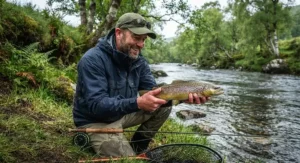
6. Guy Cotten Torgass Jacket — best sea fishing jacket for commercial-grade durability
For genuine, driving-rain sea fishing jacket duty, the Guy Cotten Torgass Jacket brings something none of the other six products on this list can claim: sixty years of commercial fishing-fleet development behind the fabric. Guy Cotten’s Nylpêche material and high-frequency welded seams — rather than stitched-and-taped construction — were engineered originally for working trawler crews, which means the waterproofing margin here is considerably wider than recreational-grade jackets need to be.
The “Magic Hood” design is worth calling out specifically: it’s cut to avoid obstructing peripheral vision, which matters enormously on a rolling boat deck or slippery rock mark, and it’s roomy enough to fit over a hard hat or beanie without losing its seal. Kimono-cut sleeves add shoulder mobility that a straight-cut commercial jacket typically sacrifices, so you’re not paying for durability at the total expense of comfort.
Based on the spec comparison with recreational sea-fishing jackets, the honest trade-off is weight and bulk — this is not a packable jacket, and it’s built assuming you’ll wear it rather than carry it in a bag “just in case.” Long-standing UK commercial suppliers who’ve stocked Guy Cotten for decades describe it as tried and tested by inshore and offshore fishing fleets, which speaks to durability more convincingly than a handful of star ratings would.
Pros:
- ✅ Commercial-grade welded seams built for continuous sea exposure
- ✅ Magic Hood design preserves peripheral vision on deck
- ✅ Kimono-cut sleeves retain mobility despite heavy-duty fabric
Cons:
- ❌ Bulkier and heavier than recreational alternatives
- ❌ Overkill for casual, fair-weather bank fishing
Typically priced in the £150-£220 range, the Torgass rewards anglers who fish exposed marks or small boats regularly enough that jacket failure genuinely isn’t an option.
7. Trakker Elements Jacket & Bib and Brace — best fishing bib and brace jacket for coarse and carp anglers
Anyone searching specifically for a fishing bib and brace jacket is usually facing a particular problem: sitting still for hours behind rods means rain finds its way in at the waist and knees long before it beats a jacket alone. The Trakker Elements Jacket & Bib and Brace combination solves that by pairing a 10,000mm waterproof, 5,000mm breathable jacket with dungaree-style bib trousers that overlap the jacket hem completely.
Constructed from a breathable nylon outer with a polyester fill and internal lining, the set is built more for sustained, static sessions — think carp swims and long coarse-fishing days — than active wading or casting. What that spec actually buys you is a genuinely sealed system: no gap at the waistband for water to exploit even when you’re leaning forward to net a fish, and enough insulation from the fill layer that you can skip a heavy base layer underneath on all but the coldest UK winter nights.
We weren’t able to verify a substantial published customer-review archive for this specific bib-and-brace combination at the time of research, so rather than fabricate sentiment, we’d point to the spec sheet itself as the more reliable signal here: matched waterproof ratings across jacket and bib, a design lineage from a brand built specifically around carp and coarse fishing, and construction details — reinforced knees, adjustable braces — clearly informed by long sit-down sessions rather than adapted from general outdoor wear.
Pros:
- ✅ Bib and brace design seals the waist gap jackets alone can’t
- ✅ Matched 10,000mm/5,000mm ratings across both pieces
- ✅ Reinforced construction suited to long, static sessions
Cons:
- ❌ Bib and brace add bulk versus a jacket-only setup
- ❌ Limited independently verifiable review data at time of writing
Together the set typically runs to a £90-£160 range depending on whether you buy jacket and bib separately or as a bundle, making it the natural pick for anyone who fishes long sessions from a fixed swim rather than moving around a lot.
Setting Up and Maintaining Your Fishing Rain Jacket
Buying the right jacket is only half the job — a surprising number of “waterproof” failures are actually maintenance failures. Most fabric technologies, whether Isotex, Paratex, or a straightforward PU coating, rely on a Durable Water Repellent (DWR) finish sitting on top of the membrane. That finish wears off through abrasion and detergent build-up long before the underlying waterproof layer fails, and when it does, rain stops beading and starts soaking into the outer fabric — a problem anglers often misdiagnose as the jacket itself leaking.
In the first thirty days, avoid two common mistakes: washing with standard biological detergent, which strips DWR coatings faster than plain water exposure ever would, and tumble-drying on high heat without checking the care label first, since excess heat can damage taped seams. Instead, wash on a gentle cycle with a technical cleaner designed for waterproofs, then reproof every few months of regular use with a spray-on or wash-in treatment — this single step recovers most of a jacket’s “new” performance and costs a fraction of a replacement.
Store jackets loosely rather than stuffed into a compression sack for months at a time, since permanent creasing can eventually crack coated fabrics at the fold lines. And check zips regularly: a light application of zip lubricant on YKK-style waterproof zips prevents the exact kind of sticking-then-forcing that leads to the tab failures some Fladen reviewers reported above.
Real-World Scenarios: Matching the Jacket to the Angler
The weekend bank angler on a budget: If you fish two or three sessions a month from a static swim and haven’t committed to a single discipline yet, the Regatta Britedale Waterproof Jacket or Fladen Authentic Wading Jacket 2.0 make more financial sense than a premium technical shell you might outgrow in preference.
The dedicated fly angler working rivers and boats: If you’re wading rivers or fishing from a drift boat several times a month, casting mobility and hood visibility genuinely change your day. The Simms Challenger Jacket earns its price here specifically because it’s engineered around the casting motion rather than adapted from hiking gear.
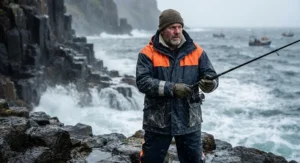
The exposed-coast sea angler: Fishing storm beaches, rock marks, or small boats regularly puts a jacket through more abuse in a season than most recreational gear sees in years. The Guy Cotten Torgass Jacket is the sensible upgrade once you’re fishing that environment often enough that jacket failure carries real consequences.
The long-session carp or coarse angler: If you’re sat behind rods for eight-hour sessions through a UK winter, the waist gap matters more than casting mobility ever will. The Trakker Elements Jacket & Bib and Brace combination directly answers that problem.
How to Choose a Mens Fishing Rain Jacket
Choosing the right jacket comes down to matching fabric technology, fit, and storage to how you actually fish, rather than chasing the highest hydrostatic head number available. Here’s a practical framework:
- Identify your dominant fishing style first. Static bank or carp fishing prioritises waist sealing and warmth; fly fishing prioritises shoulder mobility; boat and shore sea fishing prioritises hood design and abrasion resistance.
- Check the hydrostatic head rating against your typical conditions. Anything above 10,000mm comfortably handles UK rain; genuinely exposed coastal or boat work benefits from three-layer technical fabrics rated higher still.
- Weigh breathability against static or active use. If you sit still for hours, breathability matters less than insulation. If you’re wading or casting actively, poor breathability causes as much discomfort as rain would.
- Count and place the pockets deliberately. High chest pockets clear wader tops and boat rails; low hand pockets suit static bank sessions better.
- Try the hood with a hat or cap underneath. A hood that doesn’t accommodate headwear, or that restricts peripheral vision, becomes a genuine safety issue on boats and rock marks.
- Factor in genuine aggregated review sentiment, not star averages alone. A 4.5-star rating built on five reviews tells you less than a 4.1-star rating built on five hundred.
- Decide your budget band honestly, then buy once. A mid-range jacket bought once tends to outlast two budget jackets bought in succession, once you account for total spend.
Common Mistakes When Buying a Fishing Rain Jacket
The single most common mistake is buying on hydrostatic head number alone, without considering breathability — a jacket rated to 20,000mm that traps sweat can leave you just as wet and considerably colder than one rated to 10,000mm that actually vents. A close second is buying a size that fits well in the shop but doesn’t accommodate the fleece or thermal layer you’ll actually wear underneath in January; always try a jacket on over your typical winter layering, not a t-shirt.
Anglers also frequently under-budget for jacket length relative to their fishing style. Wading or boat fishing benefits from a longer drop-tail hem that seals against a rising waterline or deck spray, while a shorter, hiking-cut jacket — however waterproof — leaves a gap exactly where sitting or bending exposes your lower back. Finally, skipping reproofing maintenance (covered above) is arguably the most expensive mistake of all, since it turns a genuinely good jacket into a perceived failure within a season or two.
Fishing Jacket vs Regular Rain Jacket: What Actually Differs
It’s a fair question: does an angling waterproof top really need to differ from any decent high-street rain jacket? In several respects, yes. Fishing-specific jackets place pockets higher on the torso to clear wader tops, tackle boxes, and boat gunwales — a generic rain jacket’s low hand-warmer pockets become useless once you’re wearing waders or sat behind a rod pod. Hoods on fishing jackets are typically cut with a stiffer brim and wider field of vision, since watching a rod tip or a float matters more than it does on a high-street commute.
Fabric choice differs too: hiking and commuter rain jackets are optimised for packability and general weather, while dedicated fishing jackets — particularly wading and sea models — prioritise abrasion resistance against boat hulls, bankside vegetation, and repeated wet-dry cycling that a jacket worn twice a week for a train platform simply never encounters. That said, for genuinely casual, fair-weather anglers, a well-reviewed general waterproof like the Regatta above performs perfectly adequately, and there’s no shame in that trade-off if your fishing rarely tests the extremes.
What to Expect: Real-World Performance in UK Conditions
Specs on a page rarely translate directly into how a jacket feels three hours into a wet, windy session. In practice, a 10,000mm-rated budget jacket will keep you properly dry through sustained moderate rain, but during genuinely torrential downpours combined with high wind — the kind that drives rain sideways under hoods and up sleeves — pressure at the shoulders and back can eventually push water through seams that aren’t taped as thoroughly as premium alternatives.
Breathability differences become most obvious not during the rain itself, but afterward: pull off a budget PU-coated jacket after two active hours and you’ll often find condensation on the inside face, whereas a genuine three-layer technical fabric like the Simms Challenger’s stays comparatively dry inside even under similar exertion. Cold matters too — insulated jackets and bib-and-brace combinations genuinely change how long you can comfortably stay out in a UK winter, and that additional session length is arguably worth more to most anglers than a marginal improvement in waterproof rating.
Long-Term Cost and Maintenance
Judging jackets purely on sticker price misses the real cost-per-use picture. A £50 budget jacket reproofed and cared for properly might last two to three seasons of moderate use before the DWR finish degrades beyond recovery — call that roughly £20 a season. A £220 premium jacket, cared for the same way, commonly lasts five to eight seasons given its more durable fabric and construction, working out to a comparable or even lower annual cost once you factor in the budget jacket’s earlier replacement.
Where the maths shifts back in the budget jacket’s favour is for genuinely occasional anglers — if you fish four or five times a year, a £50 jacket that lasts three seasons is simply better value than a £220 jacket you’ll barely put through its paces. The honest advice: match spend to frequency of use rather than assuming premium always wins on total cost of ownership.
✨ Don’t Miss These Exclusive Deals!
🔍 Take your fishing kit to the next level with these carefully selected jackets. Click on any highlighted item to check current pricing and availability. The right jacket turns a damp, miserable session into one you’ll actually want to repeat!
Safety, Regulations and Staying Legal on the Bank
Before we finish, two compliance points genuinely matter for UK anglers rather than just jacket choice. First, anyone aged 13 or over fishing for salmon, trout, freshwater fish, smelt or eel with a rod and line in England, Wales, or the Border Esk region needs a valid rod fishing licence — you can buy or upgrade one covering these species directly through the Environment Agency’s rod fishing licence service, and it’s a straightforward, inexpensive process worth doing before your first session in a new jacket rather than after a warden’s visit.
Second, and arguably more important than any jacket feature discussed above: between 2019 and 2024, 41 anglers lost their lives fishing around the UK coast, and expert evidence suggests many of those lives might have been saved had the anglers been wearing lifejackets. A great jacket keeps you dry and comfortable, but it isn’t a flotation device. If you fish exposed rock marks, harbour walls, or small boats, the RNLI’s angling safety advice is worth ten minutes of anyone’s time, covering lifejacket types and reliable ways to call for help if the worst happens.

Frequently Asked Questions
❓ What waterproof rating should a mens fishing rain jacket have?
❓ Is a fishing jacket different from a normal waterproof jacket?
❓ How much should I spend on a sea fishing jacket?
❓ Do I need a bib and brace as well as a jacket for fishing?
❓ Can I use a normal rain jacket for fly fishing?
Conclusion
There’s no single “best” mens fishing rain jacket — only the jacket that matches how, where, and how often you actually fish. Occasional bank anglers on a budget will get years of honest service from the Fladen or Regatta picks above; dedicated fly anglers casting from boats and rivers will feel the difference the Simms Challenger’s stretch fabric makes within the first session; and anyone fishing exposed coastal marks regularly enough that jacket failure has real consequences should look hard at the Guy Cotten Torgass despite its bulk.
What matters more than any single spec is being honest with yourself about frequency and conditions before you spend. A £220 technical shell wasted on four fair-weather sessions a year is money better spent elsewhere, just as a £50 budget jacket asked to survive a winter of exposed rock-mark sea fishing will let you down exactly when you can least afford it. Match the jacket to the angler, care for it properly once it’s in your kit bag, and it’ll disappear into the background of good fishing days — which, ultimately, is all any of us actually want from our gear.
✨ Don’t Miss These Exclusive Deals!
🔍 Take your angling wardrobe to the next level with these carefully selected jackets. Click on any highlighted item to check current pricing and availability. The right kit means you’re planning your next trip, not dreading the weather forecast!
Recommended for You
- Best Fishing Jacket UK 2026: 7 Tested Waterproof Picks
- Womens Hiking Jacket: 7 Best Picks Tested for UK Weather (2026)
- 7 Best Mens Walking Jacket Picks for 2026
Disclaimer: This article contains affiliate links. As an Amazon Associate, I earn from qualifying purchases. If you purchase products through these links, we may earn a small commission at no additional cost to you.
✨ Found this helpful? Share it with your friends! 💬🤗
