
In This Article
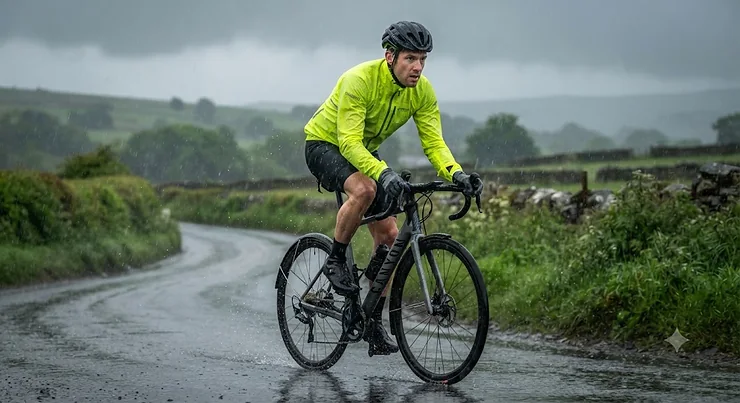
Rain doesn’t ask permission before it arrives on a British ride. One minute you’re bowling along under a decent sky, the next you’re squinting through a sideways drizzle that seems to know exactly which junction you’re at. Finding the best cycling rain jacket isn’t really about chasing a single “best” garment — it’s about matching fabric, cut and features to the kind of riding you actually do, because the jacket that saves a fast club run will smother a stop-start commute in its own sweat.
This guide digs into seven real jackets on the market right now, from featherweight race shells to a wax-cotton cape that would look at home in a 1950s cycling club photograph. Every product here has been chosen on the basis of genuine specifications and aggregated reviewer sentiment gathered from independent testers, not marketing copy. What is a cycling rain jacket, in the simplest terms? It’s a wind- and water-resistant outer layer engineered specifically for the riding position — dropped tail, articulated arms, jersey-pocket access — rather than a generic outdoor coat repurposed for two wheels. Get that distinction right and everything else about buying one gets easier. It’s also worth noting that the Met Office tracks rainfall as a defining feature of the UK’s climate year after year, which is precisely why wet-weather kit isn’t a niche purchase for British cyclists but a near-essential one.
Across the next few thousand words we’ll cover waterproof ratings that actually mean something, the compromises baked into every “breathable” claim, and honest use-case advice for commuters, road racers and everyone dragging a bike out in a downpour because the bus was full. Whether you’re after a road cycling rain jacket for a Sunday chaingang or a genuinely waterproof cycling cape for the daily grind into town, there’s a sensible option below — and a clear-eyed explanation of why it earns its place.
Quick Comparison Table
| Jacket | Best For | Weight | Waterproof Rating | Price Range |
|---|---|---|---|---|
| Rapha Core Rain Jacket II | Everyday road riding | ~126g | Fully taped, 2.5-layer | £100–£150 range |
| Altura Icon Pocket Rocket | Commuting in the wet | Mid-weight | Durable water-resistant shell | £90–£130 range |
| Bontrager Velocis Stormshell | Commuter & gravel versatility | Mid-weight | Hydrophobic nylon shell | £130–£180 range |
| Castelli Squall Shell | Lightest packable road shell | ~94–98g | Fully taped, 2-layer | £120–£160 range |
| Proviz REFLECT360 | Maximum night-time visibility | ~500g | 5,000mm rating | £90–£120 range |
| Carradice Pro-Route Cape | Traditional full-body cover | Heavier | 100% waterproof fabric | £70–£100 range |
| Q36.5 Rain Shell Jacket | Premium all-weather performance | ~120–160g | 10,000–15,000mm rated | £280–£320 range |
Looking across the table, the spread in weight tells its own story: you’re choosing between a jacket that vanishes into a jersey pocket and one built to shrug off an entire winter of commuting abuse. Reviewers testing the Castelli Squall Shell and Bontrager Velocis Stormshell side by side consistently note that the lightest options sacrifice durability, while heavier picks like the Proviz REFLECT360 and Carradice Pro-Route Cape trade packability for warmth, coverage and visibility. There’s no universally “best” row here — the right pick depends entirely on whether your priority is racing light or surviving a grim Tuesday commute.
💬 Found a jacket you like the look of? Bookmark this page and check current pricing before you head out in the next downpour!😊
Top 7 Cycling Rain Jackets: Expert Analysis
1. Rapha Core Rain Jacket II — best all-round value for everyday wet-weather riding
The standout here is simplicity done well: a genuinely waterproof, genuinely light jacket that doesn’t demand a premium price tag to perform. Built from a taped 2.5-layer nylon fabric, it tips the scales at around 126g and rolls down small enough to disappear into a single rear pocket without dominating the other two.
The 2.5-layer construction and taped seams matter because they’re the minimum spec for a jacket to be called properly waterproof rather than merely “shower-resistant” — a distinction that separates genuine protection from marketing spin dressed up as performance fabric. A water-resistant zip and elasticated drawstring hem let you dial in the fit without letting spray creep up from below, which on paper sounds minor but in practice is the difference between a dry lower back and a soggy one after twenty miles.
Based on the spec comparison with rivals at this price point, the Rapha Core Rain Jacket II earns its reputation as an everyday workhorse rather than a specialist tool — it’s the road cycling rain jacket most testers reach for when the forecast is merely “unsettled” rather than apocalyptic. Reviewers consistently report being impressed by the seam quality and the close-but-not-race cut, which makes it versatile enough for training, commuting and more relaxed rides without feeling like a compromise in any single scenario.
Pros:
- ✅ Genuinely waterproof 2.5-layer fabric with taped seams
- ✅ Packs down to roughly the size of an apple
- ✅ Versatile cut suits training, commuting and racing
Cons:
- ❌ Limited insulation for cold winter descents
- ❌ Fewer pockets than dedicated commuter jackets
At around £100–£150, the Rapha Core Rain Jacket II represents strong value against pricier shells offering marginal performance gains — a sensible first purchase for most riders.
2. Altura Icon Pocket Rocket Waterproof Packable Jacket — best commuter cycling jacket for low-light visibility
What most buyers overlook about this jacket is how much of its design is dictated by commuting realities rather than race-day aesthetics. The standout feature is its reflective coverage: a large rear pocket doubling as a stash-away pouch, plus arms finished almost entirely in reflective fabric.
That reflective arm treatment isn’t just visual flourish — on a bike, arm movement is what catches a driver’s eye fastest in low light, so putting the reflective material where the limbs actually move gives real-world visibility benefits that static reflective patches on the torso can’t match. A two-way zip allows jersey-pocket access mid-ride, while a fleece-lined neck takes the edge off cold mornings without adding significant bulk.
This is honestly one of the best commuter cycling jacket picks going, precisely because it prioritises the things commuters actually need — visibility, a looser fit for layering work clothes underneath, and a durable fabric that can handle daily wear rather than occasional weekend use. Reviewers note it isn’t the most packable option on this list, but that trade-off buys a jacket that shrugs off months of pannier-and-pavement abuse that would shred a race-fit shell within weeks.
Pros:
- ✅ Extensive reflective detailing across arms and rear
- ✅ Durable fabric built for daily commuter wear
- ✅ Two-way zip for easy on-bike pocket access
Cons:
- ❌ Bulkier to pack away than race-cut shells
- ❌ Looser fit less aerodynamic for fast group rides
Priced in the £90–£130 range, it’s a smart pick for anyone whose “ride” is really a daily journey rather than a hobby outing.
3. Bontrager Velocis Stormshell — best drop-tail cycling jacket for commuting and gravel crossover
The standout feature here is versatility: a relaxed fit that works equally well for gravel riding, commuting and foul-weather road days, built around a hydrophobic nylon shell that keeps rain out while letting sweat escape reasonably well.
This is a genuine drop-tail cycling jacket, meaning the rear hem extends noticeably lower than the front — a deliberately extended cut that shields your lower back and backside from wheel spray without you having to think about it. Reviewers highlight that the comparatively relaxed fit is what allows this crossover appeal; it’s not trying to be an aero-fit race shell, and that’s precisely the point for riders who split time between the commute, the gravel path and the club run.
Based on the spec comparison, the trade-off for that drop-tail coverage and relaxed cut is storage: the absence of pockets means the Bontrager Velocis Stormshell has nowhere to stash a phone or gilet, and it isn’t the easiest jacket to compress into a jersey pocket. What most buyers overlook is that this is a deliberate choice rather than an oversight — a pocket-free rear panel keeps the waterproofing more consistent by removing seam lines and zip access points that are common failure points for water ingress in cheaper jackets.
Pros:
- ✅ Extended drop-tail hem blocks road and tyre spray
- ✅ Hydrophobic nylon balances waterproofing and breathability
- ✅ Relaxed fit suits road, gravel and commuting
Cons:
- ❌ No pockets for on-ride storage
- ❌ Not the easiest jacket to stash in a jersey pocket
At roughly £130–£180, it sits mid-pack, but the drop-tail design alone makes it worth a look for anyone tired of a soaked lower back.
4. Castelli Squall Shell Jacket — lightest breathable cycling jacket for pocket-carry insurance
The standout feature is sheer weight: at around 94–98g, this is one of the lightest fully taped waterproof jackets on the market, built from a stretchy 2-layer fabric that behaves more like a windproof gilet than a traditional rain shell.
What that low weight buys you is genuine breathable cycling jacket performance — the two-way stretch fabric hugs the body closely enough to avoid flapping in a headwind, while remaining porous enough that testers report adequate ventilation even during sustained effort. Elastic at the wrist and waist, plus a reflective rear stripe, round out a feature set clearly aimed at riders who want insurance against a shower rather than a jacket to wear from start to finish of an all-day soaking.
Here’s what to weigh before buying: reviewers are consistent that this isn’t a commuting jacket. The featherweight fabric that makes it so packable also makes it fragile — testers specifically flag that they wouldn’t want to wear it regularly with a rucksack, since the abrasion from straps compromises the fabric faster than a proper commuter shell would tolerate. For a road cycling rain jacket you carry “just in case” on every ride, though, it’s hard to beat.
Pros:
- ✅ Among the lightest fully waterproof shells available
- ✅ Close, stretchy fit avoids wind-flap at speed
- ✅ Compresses small enough for any jersey pocket
Cons:
- ❌ Not durable enough for daily rucksack commuting
- ❌ No pockets and only a single-direction zip
Expect to pay in the £120–£160 range — a premium for the weight saving, but one road racers and sportive riders tend to consider worthwhile.
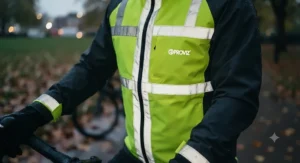
5. Proviz REFLECT360 — best reflective cycling jacket for night-time commuting
The standout feature is impossible to miss: a shell constructed almost entirely from 360-degree reflective material embedded with reflective glass beads, designed to throw back headlight beams from every angle rather than relying on a single strip or logo.
In practice, that means the jacket appears a modest grey in daylight but lights up dramatically under vehicle headlights after dark — reviewers describe the effect as startling for other road users, which is precisely the point for anyone commuting through autumn and winter evenings. Underneath the reflective shell sits a genuinely waterproof construction rated to roughly 5,000mm, with taped seams, underarm vents and a fleece-lined collar for comfort against the neck.
What the spec sheet won’t tell you, but reviewers note repeatedly, is that this level of reflectivity comes at the cost of breathability. Testers consistently flag it as warm rather than airy, useful for a mellow ride to work but liable to induce a “sauna effect” on anything more intense — Proviz itself addresses this with pricier Plus variants that add a breathable liner, which is worth knowing before you assume every reflective cycling jacket performs identically on the vent front.
Pros:
- ✅ Unmatched 360-degree reflectivity after dark
- ✅ Genuinely waterproof to a 5,000mm rating
- ✅ CE EN 20471 certified for visibility standards
Cons:
- ❌ Limited breathability during higher-intensity efforts
- ❌ Heavier than most dedicated road cycling shells
At around £90–£120, it’s a strong-value pick for anyone whose commute happens mostly in the dark and who values being seen above being aerodynamic.
6. Carradice Pro-Route Rain Cape — best waterproof cycling cape for full-body coverage
The standout feature is coverage: rather than a fitted jacket, this is a genuine cycling cape waterproof design that drapes over the torso, handlebars and thighs, protecting far more of the body and the bike in one simple piece of fabric than any jacket can manage.
A single piece of 100% waterproof material, finished in high-visibility yellow with reflective detailing, adjustable wrist loops keep the cape anchored so it doesn’t billow forward at speed, while a foldable design lets it stash away when the weather brightens. Reviewers who’ve long searched for a durable alternative to fabric waterproofs that “leak after a couple of seasons” describe capes like this as a genuine holy grail for sedate commuters and tourers, precisely because the design has barely needed to change in decades.
Based on the spec comparison with fitted jackets, the honest trade-off is wind and compatibility: a cape obscures handlebar-mounted lights and computers, can’t be worn comfortably with a rucksack since there are no sleeves, and catches crosswinds in a way a close-fitting shell simply doesn’t. What most buyers overlook is that this is precisely why capes suit a specific rider — the unhurried commuter or tourer who values dryness and simplicity over aerodynamics, not the rider racing to beat a shower on a fast group ride.
Pros:
- ✅ Covers torso, thighs and handlebars in one layer
- ✅ Durable, long-lasting waterproof construction
- ✅ High-visibility colour with reflective detailing
Cons:
- ❌ Obscures handlebar-mounted lights and computers
- ❌ Not compatible with backpacks or rucksacks
Typically priced in the £70–£100 range, it’s excellent value for riders whose journeys are unhurried enough to embrace a design this refreshingly old-fashioned.
7. Q36.5 Rain Shell Jacket — premium road cycling rain jacket for serious foul-weather protection
The standout feature is the fabric itself: a proprietary three-layer material called UF 75Shell, rated to around 15,000mm waterproofing with an RET 4 breathability score — a genuinely strong result on a scale where lower numbers mean better moisture transfer.
That headline number matters because it places the Q36.5 Rain Shell Jacket in the same conversation as premium membrane suppliers, translating into real-world performance testers describe as very strong even in persistently wet conditions, with visible beading that causes raindrops to bounce or brush straight off the fabric. Taped seams prevent leakage at the stress points, while smart tailoring and elasticated cuffs keep the fit close without restricting movement — reviewers note it dries remarkably quickly once the rain eases, a detail that matters more than it sounds on a multi-stop ride.
On paper this means near-flawless protection, but here’s what to weigh: several testers report that after roughly two hours of constant mid-level rain, a degree of moisture eventually made its way through to the base layer beneath, and the omission of a double zipper limits on-the-fly ventilation compared with rivals. It’s a jacket built and tested by people who ride seriously in the rain, and the price tag reflects that focus rather than casual commuter convenience.
Pros:
- ✅ Class-leading three-layer waterproof and breathable fabric
- ✅ Excellent fit and quick-drying performance
- ✅ Taped seams prevent leakage at stress points
Cons:
- ❌ Premium price versus more affordable rivals
- ❌ Single zip limits ventilation options
At around £280–£320, it’s firmly a premium road cycling rain jacket, best suited to riders who train through winter regardless of forecast.
Practical Usage Guide: Getting the Most From Your Rain Jacket
Buying the right jacket is only half the job — how you use it in the first month determines whether it lasts three winters or one soggy autumn. Start by washing a new waterproof jacket before its first ride, even though that sounds counterintuitive; factory finishes and packaging residue can actually reduce the fabric’s ability to bead water, and a gentle wash with a technical detergent (never fabric softener, which clogs the membrane) restores that beading effect from day one.
Reproofing is the maintenance step most riders skip entirely. Durable water repellent (DWR) coatings wear down with washing and UV exposure, typically needing a refresh every six to twelve months of regular use depending on mileage. You’ll know it’s time when rain stops beading and starts soaking into the fabric surface, even if the jacket underneath is technically still waterproof — that’s the DWR failing, not the membrane. A common first-30-days mistake is zipping a jacket fully closed on a climb and overheating badly enough to blame the jacket for poor breathability, when actually cracking the neck zip or using pit vents (where fitted) solves most ventilation complaints instantly.
Storage matters too: hang packable shells loosely rather than leaving them compressed in a saddle bag permanently, since constant compression can degrade the coating over time. For capes and heavier commuter jackets, make sure they’re fully dry before folding away, as trapped damp against a waterproof coating encourages mildew and odour that no amount of washing fully removes.
Real-World Scenarios: Which Jacket Suits Which Rider
The daily commuter, 8 miles each way, mixed traffic. A rider like this needs visibility more than they need race-fit aerodynamics — the Altura Icon Pocket Rocket or Proviz REFLECT360 both prioritise being seen in low light, and their more durable, less packable fabrics tolerate daily rucksack wear far better than an ultralight race shell ever could.
The weekend sportive rider chasing dry pockets, not dry commutes. Someone doing an occasional 60-mile ride in changeable weather doesn’t want a jacket living permanently in a pocket taking up space. The Castelli Squall Shell or Rapha Core Rain Jacket II pack down small enough to be genuinely forgettable until the sky turns, then perform properly when called upon.
The dedicated winter trainer, riding regardless of forecast. For someone logging serious miles through a British winter, cutting corners on protection isn’t worth the false economy of buying twice. The Q36.5 Rain Shell Jacket justifies its premium price precisely because it’s built for hours in the saddle rather than a five-minute dash between showers, and the drop-tail coverage of the Bontrager Velocis Stormshell adds valuable spray protection on longer, muckier routes.
Problem → Solution: Common Cycling Rain Jacket Complaints
Problem: soaked through despite a “waterproof” label. This is almost always seam failure rather than fabric failure — check for taped seams specifically, as untaped stitching lets water through the needle holes regardless of the outer fabric’s rating. Both the Q36.5 Rain Shell Jacket and Rapha Core Rain Jacket II address this directly with fully taped internal construction.
Problem: soaked from sweat, not rain. Ironically the fix is often wearing less underneath, not more waterproofing. A close-fitting merino or synthetic base layer wicks moisture away from the skin, giving a breathable shell like the Castelli Squall Shell something to actually work with rather than fighting cotton that holds moisture against you.
Problem: cold, wet lower back from wheel spray. A drop-tail cut, as found on the Bontrager Velocis Stormshell, or full coverage from the Carradice Pro-Route Rain Cape, solves this structurally rather than relying on a jacket hem that simply wasn’t designed with spray in mind.
Problem: feeling invisible on darker commutes. Waterproofing alone doesn’t equal visibility. The Proviz REFLECT360 and the reflective arm panels on the Altura Icon Pocket Rocket are purpose-built for this, offering a genuinely different level of low-light conspicuity than a standard jacket with a small reflective logo.
Problem: a jacket that performed brilliantly once, then leaked the following winter. DWR wears out. Reproofing sprays and washes, applied roughly twice a season, restore beading performance on ageing jackets that would otherwise be written off prematurely.
Buyer’s Decision Framework
If you ride mostly for transport through a city, choose a durable commuter-style jacket like the Altura Icon Pocket Rocket because daily abrasion and visibility matter more than grams saved. If you’re chasing personal bests and only need rain cover “just in case,” choose an ultralight packable shell like the Castelli Squall Shell, because pocket space and low weight outweigh long-term durability concerns you’re unlikely to test anyway. If your riding is unhurried and you want maximum dryness with minimum fuss, choose a cape like the Carradice Pro-Route Rain Cape, because full-body coverage beats aerodynamics when speed isn’t the priority. And if you train through winter regardless of forecast, choose a premium shell like the Q36.5 Rain Shell Jacket, because consistent, repeated protection across dozens of wet rides justifies the higher upfront cost.
✨ Don’t Miss These Exclusive Deals!
🔍 Take your wet-weather riding to the next level with the jackets covered above. Click through to check current pricing and availability on each one — a genuinely dry ride is one click away!
How to Choose a Cycling Rain Jacket
- Check for a genuine waterproof rating, not just “water-resistant” language. Look for a hydrostatic head figure (measured in millimetres) rather than vague marketing claims — anything below around 5,000mm will struggle in sustained rain.
- Confirm the seams are taped. Untaped seams are the single most common cause of “waterproof” jackets leaking, regardless of how good the outer fabric is.
- Match the cut to your riding style. A race-fit shell flaps and gapes if you’re sat upright commuting; a relaxed commuter cut bunches and catches wind if you’re racing.
- Weigh breathability against warmth. Fully waterproof membranes always trade some breathability for protection — decide honestly whether sweat or rain is your bigger enemy.
- Consider visibility separately from waterproofing. A jacket can be perfectly dry and still leave you dangerously hard to see; check reflective coverage independently.
- Think about how you’ll carry it. If it needs to live in a jersey pocket, weight and pack size matter as much as the waterproof rating itself.
- Factor in your typical ride duration. Short, sharp showers favour lightweight shells; multi-hour exposure favours heavier, more durable fabrics like those on commuter jackets and capes.
Waterproof Cycling Jacket Review: How We Judge the Field
Every waterproof cycling jacket review worth trusting rests on a handful of consistent tests: a hydrostatic head measurement for genuine waterproofing, seam inspection under a water column to catch leaks at stress points, and extended real-world wear in sustained rain rather than a five-minute shower simulation. Independent UK testers at outlets such as Cyclist’s packable jacket buying guide place particular importance on isolating seams and zips individually, since a jacket can carry an impressive fabric rating on paper while still leaking badly at a single poorly sealed junction.
What separates a genuinely useful review from a spec-sheet regurgitation is context: a 15,000mm rating means little without knowing how the jacket performed after two hours of continuous rain, or whether the breathability held up during a hard effort rather than a gentle spin. That’s precisely why this guide leans on aggregated reviewer sentiment rather than isolated marketing figures — a single number rarely tells the whole story of how a jacket behaves on an actual British winter commute.
Breathable Cycling Jacket: Why “Waterproof” and “Breathable” Are Always a Compromise
Every breathable cycling jacket on the market is, at some level, fighting physics. A fabric that’s completely impermeable to rain from the outside will always struggle to let body-generated moisture vapour escape from the inside — it’s why RET ratings exist, measuring exactly how much resistance a membrane offers to that outward moisture transfer. Lower RET numbers, like the roughly RET 4 rating on the Q36.5 Rain Shell Jacket, indicate genuinely strong breathability for a fully waterproof garment, while heavier, more affordable fabrics like those on the Proviz REFLECT360 tend to sit further up that scale.
What most buyers overlook is that pit zips, back vents and looser cuts are just as important to real-world breathability as the fabric’s technical rating. A highly breathable membrane paired with a tight collar and no ventilation options will still feel stuffy on a hard effort, while a moderately breathable fabric with generous vents, like the underarm zips on the Proviz REFLECT360, can feel more comfortable in practice than the spec sheet alone suggests.
Road Cycling Rain Jacket vs Commuter Jacket: What Actually Changes
A dedicated road cycling rain jacket and a commuter jacket solve overlapping problems with very different priorities. Road-focused shells like the Castelli Squall Shell and Q36.5 Rain Shell Jacket are cut close to the body to avoid flapping at speed, built as light as possible for pocket storage, and optimised for breathability during sustained effort — but they sacrifice durability and storage in the process.
Commuter jackets like the Altura Icon Pocket Rocket and Bontrager Velocis Stormshell flip those priorities. A looser cut accommodates work clothes or a rucksack, more durable fabric survives daily wear against panniers and traffic barriers, and additional reflective detailing addresses the reality that commuters ride in low light far more often than weekend racers do. Neither approach is objectively superior — they’re solving genuinely different problems, and buying a race-fit shell for daily commuting (or vice versa) is one of the most common mismatches riders make.
Safety, Visibility and Regulations: What UK Cyclists Should Know
The UK’s Highway Code addresses cyclist clothing directly. Rule 59 recommends that cyclists wear light-coloured or fluorescent clothing during the day and reflective clothing after dark, though it stops short of making this a legal requirement. It’s worth understanding that distinction: no police officer can fine you for riding in black, but courts have historically weighed a cyclist’s visibility choices when apportioning blame in collision cases, which makes reflective detailing a sensible precaution rather than mere box-ticking.
It’s also worth noting that the evidence base here is more contested than the rule itself suggests. Cycling UK has reviewed the research on conspicuity aids and points out that contrasting colours against the background, rather than fluorescent colours specifically, appear to matter more for daytime visibility, while retroreflective elements on moving limbs make the biggest difference after dark. That’s precisely why jackets like the Altura Icon Pocket Rocket, which places reflective material on the arms rather than just the torso, tend to perform better in real-world visibility than a jacket with a single static reflective logo.
Cold, wet conditions carry a genuine health risk beyond simple discomfort. Prolonged exposure to wet, windy weather can contribute to hypothermia even when air temperatures aren’t dramatically low, and early warning signs include persistent shivering, clumsiness and confusion — symptoms worth recognising in yourself or a riding companion on a long, cold, wet ride. A genuinely waterproof, wind-resistant jacket isn’t just about comfort; it’s a meaningful layer of protection against a real physiological risk on longer winter rides.
Long-Term Cost and Maintenance: What a Rain Jacket Really Costs Over Time
A cheap jacket that needs replacing every season rarely works out cheaper than a well-made one that lasts five winters. Budget waterproofs in the £40–£60 range often use thinner membranes that degrade faster under regular washing, meaning a rider replacing one annually could spend more over five years than someone who bought a single £150 jacket and reproofed it twice a season.
Maintenance costs are modest but real: a bottle of technical wash and a reproofing spray typically costs somewhere in the £15–£25 range and, used two or three times a year, meaningfully extends a jacket’s working life. Long-standing rider reviews collected by Cycling UK often flag durability as underrated compared with initial waterproof rating — a jacket that’s merely “very waterproof” but falls apart within a year offers worse value than one that’s “adequately waterproof” and still performing after three.
Features That Actually Matter (And Those That Don’t)
Taped seams matter enormously; a fashionable colourway does not. A genuinely adjustable hem and cuffs matter, because they stop water creeping in at the gaps a fixed hem can’t seal; an oversized brand logo does not affect performance in any measurable way. Reflective detailing placed on moving limbs matters for real visibility; a single small reflective patch on the chest offers only marginal benefit by comparison. Pit vents or a back vent matter if you ride hard; extra decorative zips that don’t open onto ventilated fabric are largely cosmetic. Pack size matters if the jacket needs to live in a pocket; it’s irrelevant if the jacket is a dedicated commuter piece that lives on your back, not in your bag.

Frequently Asked Questions
❓ What waterproof rating is good for a cycling jacket?
❓ Can I wear a normal raincoat for cycling instead?
❓ How often should I reproof a waterproof cycling jacket?
❓ Are cycling capes actually warmer than jackets?
❓ Is a more expensive cycling rain jacket always better?
Conclusion
There’s no single best cycling rain jacket for every rider — only the right jacket for the riding you actually do. A commuter fighting rush-hour traffic in the dark needs visibility and durability far more than they need a jacket that packs into a matchbox, which is exactly why the Altura Icon Pocket Rocket and Proviz REFLECT360 earn their place on this list. A weekend rider chasing dry miles between showers wants something forgettable in a pocket until it’s needed, making the Castelli Squall Shell and Rapha Core Rain Jacket II genuinely sensible picks. Riders logging serious winter mileage regardless of forecast are better served by the durability and drop-tail coverage of the Bontrager Velocis Stormshell, the old-school full coverage of the Carradice Pro-Route Rain Cape, or the premium performance of the Q36.5 Rain Shell Jacket when budget allows.
Whatever you choose, remember that waterproofing alone isn’t the whole story — visibility, breathability and fit all shape how a jacket actually performs on a real British ride, not just on a spec sheet. Check current prices before buying, since availability and cost shift regularly, and prioritise the features that match your actual riding pattern over the ones that look impressive in a marketing photo.
Recommended for You
- Womens Packable Rain Jacket: 7 Tested Picks for 2026
- Mens Packable Rain Jacket: 7 Best Picks Tested for 2026
- 7 Best Packable Rain Jacket Picks 2026: Don’t Get Caught Soaked
Disclaimer: This article contains affiliate links. As an Amazon Associate, I earn from qualifying purchases. If you purchase products through these links, we may earn a small commission at no additional cost to you.
✨ Found this helpful? Share it with your friends! 💬🤗
