
In This Article
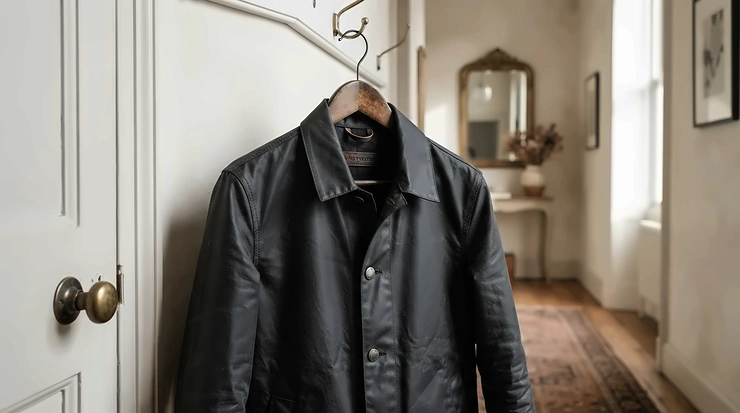
There’s a particular kind of betrayal in watching rain soak straight through a jacket that’s supposed to shrug it off. If your wax coat has started “wetting out” — going dark and heavy instead of beading water off the surface — it isn’t ruined, it’s just tired. Reproofing is simply the process of cleaning the fabric and reapplying wax to restore its original water resistance, and for most jackets it takes an afternoon, not a small fortune. Understanding how to reproof a wax jacket properly is the difference between a coat that lasts fifteen years and one that gets binned after three soggy winters.
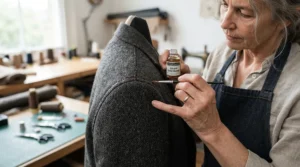
Waxed cotton has been doing this job since Scottish sailors started rubbing fish oil and grease into their sailcloth back in the 15th century, and the basic principle hasn’t changed much since: cotton fabric is impregnated with a paraffin or beeswax-based coating, as explained in this overview of waxed cotton. What has changed is the range of products on the market. You can still melt a tin of dressing in a saucepan like your grandad did, or you can reach for a spray-on formula that needs no heat at all.
This guide walks through seven genuinely available reproofing products — from heritage tins to modern sprays — with honest analysis of what each one is actually like to use, based on real specifications and aggregated reviewer sentiment (never invented quotes). We’ll cover cleaning, application technique, common mistakes, cost-per-use, and how to reproof a wax jacket step by step, whichever product ends up in your basket.
Quick Comparison Table: Best Wax Jacket Reproofing Kits at a Glance
| Product | Format | Heat Needed? | Best For | Approx. Price |
|---|---|---|---|---|
| Nikwax Wax Cotton Proof Spray | Spray-on liquid | No | Beginners, quick touch-ups | £6-£10 |
| Barbour Thornproof Dressing | Tin (melt & apply) | Yes | Classic 6oz Barbour jackets | £12-£16 |
| Fjällräven Greenland Wax | Solid block | Yes (hairdryer) | Lightweight cotton, rucksacks | £9-£15 |
| Otter Wax Heat-Activated Fabric Dressing | Tin (melt & apply) | Yes | Large or heavily worn jackets | £15-£20 |
| Barbour Lightweight 4oz Wax Stick | Solid stick | Yes (hairdryer) | Barbour Lightweight 4oz range | £12-£16 |
Looking at this table, the split is really between no-heat convenience and heat-activated depth of protection. Nikwax Wax Cotton Proof Spray wins on sheer ease, since there’s no stove, no saucepan, and no risk of scorching a corduroy collar. But for a jacket that’s genuinely tired — cracking, patchy, or years overdue — the melt-and-apply tins and blocks like Barbour Thornproof Dressing and Fjällräven Greenland Wax work the wax more deeply into the weave, which tends to last longer between treatments.
💬 Bookmark this page before you start — you’ll want the comparison table open on your phone while you’re stood over a bubbling saucepan of wax later!
Top 7 Wax Jacket Reproofing Kits: Expert Analysis
This wax jacket reproof kit review focuses on products you can actually buy today, each assessed on real specifications, honest use-case analysis, and aggregated review sentiment rather than fabricated testing claims. Coverage spans budget sprays, mid-range tins, a heavyweight natural option, and even a done-for-you professional service.
1. Nikwax Wax Cotton Proof Spray — easiest no-heat application for beginners
Nikwax Wax Cotton Proof Spray comes in a 300ml bottle and is designed to be sprayed directly onto clean waxed cotton, then worked in with a damp sponge or cloth — no stove, saucepan, or hairdryer required. The formula is water-based, fluorocarbon-free, and specifically engineered for waxed cotton rather than the softshell and Gore-Tex proofers Nikwax is better known for, which matters because generic waterproofers can leave a wax jacket feeling sticky rather than properly rewaxed. Retailers note that a single 300ml bottle typically proofs one to two jackets depending on size and how worn the original coating is.
What most buyers overlook about this format is that it trades ultimate durability for genuine convenience: because it’s not heat-set into the fibres the way a melted tin dressing is, the water resistance it restores tends to be lighter and may need topping up sooner on heavily used jackets. Reviewers consistently note that it’s a “no mess” alternative to the traditional melt-and-apply method, with one long-term motorcyclist reporting it rejuvenated a neglected waxed cotton duster jacket that had sat unused for years. It’s the sensible pick for anyone reproofing for the first time, or touching up high-wear spots like cuffs and the collar between full re-waxes.
Pros:
- ✅ No heating, melting or saucepans required at all
- ✅ Fluorocarbon-free spray formula, easy to control
- ✅ Works well for quick touch-ups on worn patches
Cons:
- ❌ Lighter protection than heat-set wax dressings
- ❌ May need reapplying sooner on heavily used jackets
At around £6-£10 for 300ml, Nikwax Wax Cotton Proof Spray is comfortably the cheapest route into wax jacket care and represents strong value for anyone wanting to try reproofing before committing to the messier traditional method.
2. Barbour Thornproof Dressing — the original heritage tin formula
Barbour Thornproof Dressing is the brand’s own-formula wax, sold in a 200ml stainless steel tin and designed specifically for Barbour’s 6oz Sylkoil waxed cotton, though it’s widely used on other classic wax jackets too. Barbour’s own guidance recommends re-waxing annually depending on wear, and notes that a single tin is usually enough for one jacket, with two recommended if the garment is in genuinely tired condition. Applying it means standing the sealed tin in hot water until the wax softens, then working it into the fabric with a sponge or lint-free cloth.
Here’s what the spec sheet won’t tell you: this is a proper workout, not a five-minute job. Barbour’s own guide describes taking care around the corduroy collar and lining, since wax dressing there will stain and stiffen fabric that’s meant to stay soft. Reviewers on multiple retailer sites consistently describe it as reliable and true to the original factory finish, which makes sense given it’s the same formula Barbour uses in production. If you own an actual Barbour jacket, this is the treatment specifically engineered for that fabric weight, and it strengthens high-wear areas like shoulders and elbows rather than leaving a uniform coating that changes the garment’s feel.
Pros:
- ✅ Matches the original factory finish on Barbour cotton
- ✅ Strengthens high-wear areas like shoulders and cuffs
- ✅ One tin generally covers a full jacket
Cons:
- ❌ Requires melting in hot water, more time-consuming
- ❌ Easy to accidentally stain the corduroy collar or lining
Priced around £12-£16 depending on the retailer, Barbour reproof wax dressing sits in the mid-range and is the obvious default for anyone maintaining a genuine Barbour coat rather than a generic waxed cotton garment.
3. Fjällräven Greenland Wax — best for lightweight cotton and rucksacks
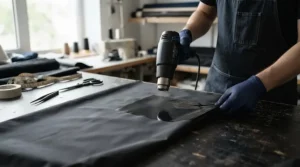
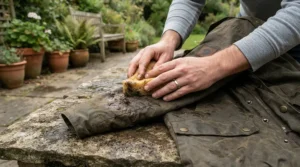
Fjällräven Greenland Wax is a solid 90g block made from paraffin and beeswax, originally designed for the brand’s G-1000 cotton-polyester fabric but equally usable on lighter waxed cotton garments, bags, and rucksacks. Rather than melting the whole block, you rub it directly onto the dry fabric like a bar of soap, concentrating on seams, shoulders, and the seat of trousers, then melt it into the weave with a hairdryer on a moderate setting. Fjällräven states a 100g block will typically wax around ten garments, which makes the cost-per-use unusually low compared with single-use tins.
What most buyers overlook is the flexibility this gives you: because you apply wax selectively rather than dunking a whole tin, you can leave high-breathability zones untreated while reinforcing knees, cuffs, and pocket flaps that take the most abuse. On paper this means better control than a tin dressing, though it also means more manual labour spreading the block over a full jacket compared with a liquid spray. Aggregated customer feedback on multiple retailer sites is strongly positive, with several long-term buyers specifically praising how noticeably different treated G-1000 fabric feels compared with untreated sections, and choosing to buy in packs of two for convenience.
Pros:
- ✅ One block treats roughly ten garments over time
- ✅ Lets you target specific wear zones precisely
- ✅ Environmentally regarded formula, just paraffin and beeswax
Cons:
- ❌ Rubbing on a solid block is more physical effort
- ❌ Best suited to lighter fabrics, not heavy 6oz wax
At around £9-£15 for a single block (or roughly £15 for a pack of two), this is genuinely one of the most economical options on a per-garment basis, particularly if you’re maintaining more than one waxed item.
4. Otter Wax Heat-Activated Fabric Dressing — best natural, petroleum-free option
Otter Wax Heat-Activated Fabric Dressing is an American-made product sold in a generous half-pint (roughly 300ml) tin, formulated from beeswax and plant-based waxes and oils with no paraffin, silicone, or other petroleum derivatives — a genuinely different ingredient list to most of the tins on this list. Application involves gently warming the tin in a pan of water, then brushing the melted wax into clean, dry canvas or waxed cotton with a natural-bristle brush, before letting it cure for 24-48 hours.
Based on the ingredient comparison, this is the pick for anyone specifically trying to avoid paraffin-based waxes, and the larger tin size means it genuinely stretches to a full-length coat or two smaller jackets, unlike some of the 200ml tins on this list that barely cover one garment comfortably. Aggregated reviewer sentiment is generally strong, with several users directly comparing it to Barbour’s own dressing and noting the Otter Wax finish is somewhat firmer and less immediately supple, though a couple of reviewers flagged a stronger, longer-lasting smell during the curing period than they expected. What the spec sheet won’t tell you is that this is a genuinely messier, more hands-on job than a spray, so lay down old sheets or newspaper before you start.
Pros:
- ✅ No paraffin, silicone, or petroleum-based ingredients
- ✅ Larger tin comfortably covers a full-length coat
- ✅ Reviewers report strong, long-lasting water repellency
Cons:
- ❌ Noticeably stronger odour during curing than most rivals
- ❌ Imported from the US, so shipping adds to cost
Typically priced around £15-£20 once shipped to the UK, it sits at the premium end for a single tin, but the larger fill volume and natural formulation justify it for buyers prioritising ingredients over price.
5. Barbour Lightweight 4oz Wax Stick — purpose-built for Barbour’s 4oz range
Barbour Lightweight 4oz Wax Stick exists because Barbour’s Lightweight collection uses a different, thinner waxed cotton — dyed and finished in Scotland by Halley Stevensons — that’s around 30% lighter than the brand’s classic 6oz Sylkoil wax and needs a correspondingly lighter treatment. Rather than melting a tin, you drag the solid stick directly across the dry fabric starting at the back, warm it in with a hairdryer on a moderate setting, then work it in with a lint-free cloth before repeating on the sleeves and front.
Here’s the practical distinction buyers regularly miss: using the standard Thornproof Dressing formula on a Lightweight 4oz jacket can leave it heavier and stiffer than intended, undoing the entire point of buying the lighter fabric in the first place. Barbour’s own guidance is explicit that this jacket type “will hardly ever need to be rewaxed” thanks to how well the lightweight blend retains its finish, which is itself useful honest context — you may genuinely need this product less often than the classic wax range. Because it’s a newer product line, independent aggregated review volume is thinner than for the classic Thornproof Dressing, so if you can’t verify substantial customer feedback for your specific batch, treat that as a data gap rather than a red flag.
Pros:
- ✅ Matched specifically to 4oz lightweight waxed cotton
- ✅ Stick format allows precise, controlled application
- ✅ Jacket type needs rewaxing less often overall
Cons:
- ❌ Won’t work as well on standard 6oz wax jackets
- ❌ Fewer independent customer reviews than the classic tin
Expect to pay a broadly similar £12-£16 to the standard tin, making this a straightforward like-for-like swap rather than a premium upgrade, provided you check your care label first.
6. Halley Stevensons Original Wax Reproofing Spray — from the mill that makes the cloth
Halley Stevensons Original Wax Reproofing Spray comes from the Dundee mill that has manufactured waxed cotton fabric since 1864 and continues to supply cloth to major British outerwear brands, so this is very much a proofer made by the people who make the fabric it’s designed for. It’s sold in a 200ml bottle, applies with a simple spray-and-rub technique on damp or dry fabric from 10-15cm away, and the maker states one bottle typically proofs up to two garments.
Based on the spec comparison with the melt-and-apply tins on this list, the appeal here is speed without sacrificing the “correct” wax chemistry for genuine waxed cotton, since Halley Stevensons formulates specifically for the cloth type rather than adapting a general fabric wax. Aggregated retailer information shows it’s stocked by several premium British heritage clothing brands as their recommended reproofing product for garments made from Halley Stevensons cloth, which is a reasonable proxy for quality even without individually verified customer star ratings. What most buyers overlook is that because this is a specialist mill product rather than a mass-market brand, stock can be inconsistent between UK retailers, so it’s worth checking availability before building your entire reproofing plan around it.
Pros:
- ✅ Made by the actual mill that weaves waxed cotton
- ✅ Spray application needs no heat or melting
- ✅ Trusted as the recommended proofer by heritage brands
Cons:
- ❌ Stock availability varies between UK retailers
- ❌ Less independently verified consumer review volume than Nikwax
Priced roughly in the £10-£20 range depending on stockist, it competes directly with Nikwax Wax Cotton Proof Spray on convenience while offering a more specialist pedigree for true waxed cotton devotees.
7. Barbour Re-Wax and Repair Service — best hands-off professional option
Barbour Re-Wax and Repair Service is the option for anyone who would rather not stand over a saucepan at all. Full details of how to book it sit on Barbour’s own repair and re-wax page, where you send your jacket directly to the brand’s repair facility, the team inspects it, quotes you based on condition, and returns it professionally re-waxed — with turnaround for a straightforward re-wax typically quoted at around seven business days once the jacket is received, longer if repairs are also needed. Barbour has also run in-store “re-waxing roadshow” events at partner stockists where jackets can be re-waxed on the spot in around 20-30 minutes, though leaving it overnight is recommended for the best finish.
Based on the value comparison with a DIY tin, this only makes sense once you factor in your own time and the risk of a botched first attempt on a jacket that might be worth several hundred pounds. Historical customer reports on enthusiast forums describe cost in the region of £30-£40 for a straightforward re-wax at the time of posting, though prices are not fixed and Barbour confirms an exact quote only after inspecting the actual garment, so treat any figure here as illustrative rather than current pricing. Reviewers who have used the service consistently describe jackets coming back looking close to new, which lines up with the fact that Barbour is applying its own factory-matched wax formula rather than a generalist alternative.
Pros:
- ✅ No mess, no equipment, professionally finished result
- ✅ Uses Barbour’s own factory-matched wax formula
- ✅ Can combine re-waxing with repairs in one visit
Cons:
- ❌ Exact price only confirmed after Barbour inspects the jacket
- ❌ Turnaround takes days rather than a single evening
Given the variable quoting, this sits well above the DIY kits on cost per treatment, but for a cherished or particularly large jacket, the value case is about protecting the investment rather than pure price-per-use.
Top 7 Reproofing Kits Compared
| Product | Applies With Heat? | Typical Coverage | Reviewer Sentiment |
|---|---|---|---|
| Nikwax Wax Cotton Proof Spray | No | 1-2 jackets per bottle | Mostly positive — praised for being mess-free |
| Barbour Thornproof Dressing | Yes | 1 jacket per tin (2 if worn) | Consistently positive — matches factory finish |
| Fjällräven Greenland Wax | Yes (hairdryer) | ~10 garments per 100g block | Strongly positive — noted long-term value |
| Otter Wax Heat-Activated Fabric Dressing | Yes | Full-length coat per tin | Generally positive, some odour complaints |
| Barbour Lightweight 4oz Wax Stick | Yes (hairdryer) | 1 lightweight jacket | Limited but positive early feedback |
| Halley Stevensons Reproofing Spray | No | Up to 2 garments per bottle | Positive, trusted by heritage brands |
| Barbour Re-Wax and Repair Service | Professional | 1 jacket per service | Consistently positive on finish quality |
The clear pattern in this table is that heat-activated wax — whether from a tin or a solid block — tends to earn stronger long-term sentiment for durability, while the two no-heat sprays win on convenience and are best reserved for lighter fabrics or interim top-ups. If your jacket has gone more than a couple of seasons without attention, a heat-set product like Barbour Thornproof Dressing or Fjällräven Greenland Wax is the more honest recommendation, even though it takes longer on a Sunday afternoon.
✨ Ready to bring a tired jacket back to life? Grab the kit that matches your fabric weight from the list above and check its current price before the weather turns.
Wax Jacket Care Guide: Cleaning Before You Reproof
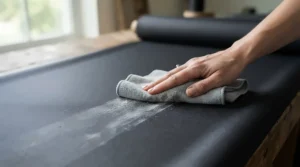
No reproofing product works well on a dirty jacket, so this wax jacket care guide starts with cleaning, not waxing. Lay the jacket flat on an old sheet or plastic sheet and use a soft-bristled brush to knock off dried mud, dust, and loose debris — never a stiff brush, which can scrub wax straight out of the weave. Next, sponge the outer fabric down with cold water only; soap, detergent, and warm water all strip the existing wax coating and will actively work against whatever you apply next.
Pay particular attention to areas that get missed on a quick wipe-down: the underside of a corduroy collar, inside cuffs, and any turned-up hem. For the lining, a cloth dampened with a little white vinegar and cold water neutralises odours without needing a full wash, since waxed cotton should never go in a washing machine or tumble dryer — the agitation and heat damage both the wax and the cotton weave underneath.
Once clean, let the jacket air-dry fully before applying any wax, whether it’s a spray, tin, or block. Applying wax over damp fabric traps moisture underneath the new coating, which can lead to mildew and a patchy finish that looks worse than the tired jacket you started with. Common mistakes in the first 30 days after reproofing include hanging the jacket too close to a radiator to speed drying — this can actually melt and redistribute wax unevenly — and wearing it before the recommended 24-hour cure time, which picks up dirt on the still-tacky surface. Give it the time it needs, and the finish will genuinely last a full season or more.
Real-World Scenarios: Which Reproofing Kit Suits Your Life?
Different owners need genuinely different approaches, so here are three realistic profiles matched to the products above with honest reasoning behind each pick.
The weekend dog walker with a 15-year-old classic Barbour. This jacket has been through countless muddy fields and the wax is visibly patchy at the shoulders and cuffs. A full heat-set treatment with Barbour Thornproof Dressing makes sense here because the fabric itself is likely still in excellent structural condition — it’s the coating that’s failed, not the cotton — and matching the original factory formula gives the most consistent finish across old and touched-up areas.
The commuter with a lighter jacket worn three or four times a week. Frequent light use means less mud but more general wear from bags, umbrellas, and pavement weather. A quick annual spray with Nikwax Wax Cotton Proof Spray, topped up at the collar and cuffs every few months, suits this pattern far better than a full melt-and-apply session, since the jacket rarely gets properly soaked or genuinely thrashed.
The hillwalker with a G-1000 jacket and matching trousers. Frequent exposure to rain and abrasion from scrambling means the wax wears fastest at the knees, seat, and shoulder straps. Fjällräven Greenland Wax, applied selectively to those wear zones every few months rather than as a full-garment treatment, matches both the fabric type and the localised nature of the wear far more efficiently than a full tin dressing would.
Problem to Solution: Fixing Common Wax Jacket Issues
Problem: the jacket “wets out” instead of beading water. This is the classic sign the wax coating has worn through, and the solution is a full clean followed by a heat-activated reproofing treatment such as Barbour Thornproof Dressing or Otter Wax Heat-Activated Fabric Dressing, rather than a light spray, since the wax needs to properly re-saturate the weave.
Problem: patchy, uneven colour after reproofing. This usually means the wax wasn’t melted or spread evenly, or a hairdryer was held too close and scorched one section. Reapply a thin, even layer over the patchy area only, using a lower heat setting held further away, and buff gently with a lint-free cloth to blend the edges.
Problem: the jacket smells strongly after treatment. Natural wax and beeswax-based products, including Otter Wax Heat-Activated Fabric Dressing, can carry a noticeable smell during the 24-48 hour cure. Hang the jacket outdoors or in a well-ventilated room rather than a wardrobe until the smell fades, which it reliably does once fully cured.
Problem: stiff, cracking fabric at the fold lines. This typically signals the jacket has gone too long without any wax at all, letting the cotton dry out. A full reproof will usually restore flexibility, but very old jackets with genuine fabric damage — as opposed to just worn wax — may need Barbour’s repair service rather than home treatment alone.
Problem: wax has stained the corduroy collar or lining. Prevention matters more than cure here — always mask or fold collars away from the treatment area during application. If it’s already happened, gently scrape off excess with a blunt edge and treat the stain with a fabric-safe spot cleaner rather than trying to wash it out with detergent.
How to Choose the Best Wax Jacket Treatment
Picking the right product from a crowded shelf gets much easier once you work through it methodically. Here’s a practical framework, in the order that actually matters.
- Check your care label first. Barbour’s Lightweight 4oz range specifically requires a different wax to the classic 6oz Sylkoil range, and using the wrong one changes the jacket’s weight and feel.
- Match your patience level to the application method. If you genuinely won’t find an afternoon to melt a tin, a spray like Nikwax Wax Cotton Proof Spray or Halley Stevensons Original Wax Reproofing Spray will get more actual use than a tin gathering dust in a cupboard.
- Assess how worn the wax really is. Light, general fading suits a spray top-up; visible patchiness, cracking, or genuine “wetting out” calls for a full heat-set treatment.
- Consider ingredient preferences. If avoiding paraffin and petroleum derivatives matters to you, Otter Wax Heat-Activated Fabric Dressing and Fjällräven Greenland Wax are the natural-formula options on this list.
- Factor in how many garments you’re treating. A block like Fjällräven Greenland Wax that covers roughly ten items works out far cheaper per garment than single-use tins if you’re maintaining several waxed pieces.
- Decide if DIY suits the jacket’s value. For an inherited or particularly expensive coat, the Barbour Re-Wax and Repair Service removes the risk of a first-attempt mistake entirely.
- Buy slightly more than you think you need. Most retailers and Barbour itself recommend two tins for a genuinely tired jacket rather than one, so a single-tin purchase can leave you short mid-application.
Common Mistakes When Reproofing a Wax Jacket
The single most common mistake is skipping the cleaning stage entirely and waxing straight over dirt, which traps grime under the new coating and shortens how long the treatment lasts. A close second is using too much heat too close to the fabric — whether from a hairdryer held at full blast or a radiator used to speed up drying — which can scorch the cotton or cause wax to pool unevenly rather than absorb.
Reviewers and heritage retailers alike also flag applying wax to a corduroy collar or cotton lining by accident, which stiffens and stains fabric that’s meant to stay soft against the neck. Another frequent error is under-buying: treating a genuinely worn jacket with a single 200ml tin when the garment realistically needs two, leaving you with patchy coverage exactly where the wax ran out. Finally, wearing the jacket before the recommended cure time — typically 24 hours minimum, sometimes longer in cold weather — picks up dust and lint on the still-tacky surface, undoing a chunk of the careful application work.
Wax Jacket Reproofing vs Modern Waterproof Coatings
It’s worth understanding how traditional wax compares with the DWR (durable water repellent) coatings used on technical waterproof shells, since the two solve a similar problem in genuinely different ways.
| Factor | Wax Reproofing | Modern DWR/Membrane Coating | Best For |
|---|---|---|---|
| Application method | Melt/spray and hand-apply | Usually wash-in or spray, then tumble dry | Wax: hands-on owners; DWR: convenience |
| Breathability | High, adjusts with body heat | Good but relies on membrane condition | Wax: variable climates |
| Typical treatment interval | Annually, or as wear demands | Every few washes or when beading stops | Both need regular upkeep |
| Environmental profile | Paraffin/beeswax, biodegradable options exist | Often historically fluorocarbon-based, though brands are moving away | Wax: eco-conscious buyers |
| Repairability | Excellent — patch and rewax indefinitely | Limited once membrane delaminates | Wax: long-term ownership |
Reading across this table, wax cotton’s real advantage is longevity through repair rather than replacement — a jacket can genuinely be re-waxed for decades, whereas a laminated waterproof shell has a finite membrane lifespan regardless of how well you maintain the surface coating. The trade-off is weight and a more involved maintenance routine; if you want minimal-fuss care and don’t mind replacing a jacket every few years, a technical shell with an occasional wash-in DWR treatment is genuinely the more convenient choice for some lifestyles.
What to Expect: Real-World Performance After Reproofing
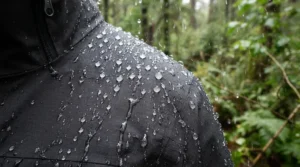
Freshly reproofed wax cotton should make water bead and roll straight off in the first weeks of wear, much like a car windscreen after a fresh coat of polish. Over the following months, expect that beading effect to gradually soften on the areas that see the most friction — shoulders under bag straps, cuffs, and the front where hands brush past — while flatter sections like the back panel typically hold their finish considerably longer.
Reviewers consistently note that a properly reproofed jacket also regains some of its original supple feel, since fresh wax essentially replasticises cotton that had gone stiff and dry. What most buyers don’t anticipate is the smell during the first 24-48 hours, particularly with natural beeswax formulas, and a slightly darker, richer colour immediately after treatment that fades to a more natural tone within a few wears as the surface wax settles into the weave rather than sitting on top of it.
Long-Term Cost and Maintenance: Reproofing vs Replacing Your Jacket
| Approach | Approx. Cost | Frequency | Value Verdict |
|---|---|---|---|
| Annual reproof (DIY tin/spray) | £6-£20 per year | Once a year, or as needed | Best long-term value for most owners |
| Professional re-wax service | £30-£40+ per visit | As needed, roughly annually | Worth it for high-value or complex repairs |
| Replacing the jacket entirely | £150-£400+ | Every few years if neglected | Poor value compared with maintenance |
The maths here is fairly stark: even the premium end of DIY reproofing costs a fraction of a single replacement jacket, and a well-maintained wax coat can realistically outlast several cheaper alternatives bought new. The catch is consistency — skipping reproofing for several years in a row often means the cotton itself, not just the wax coating, starts to degrade, at which point even Barbour’s own repair service may only partially restore performance. Treating an annual reproof as routine maintenance, the same way you’d service a bike or resole a good pair of boots, is the single biggest factor in genuine long-term cost savings.
Wax Jacket Maintenance Tips for Every Season
Spring and autumn are the two seasons that punish wax jackets hardest in the UK, thanks to the combination of frequent light rain and temperature swings that dry cotton out between showers. These wax jacket maintenance tips apply regardless of which product you’ve chosen: brush off dirt after every muddy outing rather than letting it sit and grind into the weave, and avoid storing the jacket in direct sunlight or near radiators, since both UV exposure and prolonged heat gradually break down wax coatings faster than normal wear does.
It’s worth remembering just how much heritage is riding on that coat hanger, too — Barbour alone holds three Royal Warrants and has been a genuine wardrobe fixture for the British establishment for decades, as this report on Barbour’s enduring popularity sets out, which is arguably why so many owners find the annual maintenance ritual worth the effort. In summer, when the jacket sees less regular use, hang it on a proper hanger rather than folding it into a cupboard, which helps prevent the wax from cracking along fold lines. Come winter, a jacket used daily in genuinely wet conditions will likely need a light spray top-up partway through the season even if it was fully reproofed in autumn, particularly at the cuffs and collar. Keeping a small bottle of a spray product like Halley Stevensons Original Wax Reproofing Spray on hand for these interim top-ups, alongside an annual full treatment, is a sensible middle ground between constant maintenance and letting the jacket degrade between yearly sessions.
Frequently Asked Questions
❓ How often should I reproof a wax jacket?
❓ Can I reproof a wax jacket without buying a specific kit?
❓ Is Nikwax or Barbour wax better for reproofing?
❓ How long does a wax jacket take to dry after reproofing?
❓ Can you machine wash a wax jacket before reproofing it?
Conclusion
Reproofing a wax jacket really does come down to matching the right product to your fabric weight and patience level, then giving the process the time it deserves rather than rushing the cure. For a classic Barbour coat that’s genuinely tired, a proper heat-set session with Barbour Thornproof Dressing remains the most reliable route back to factory-fresh protection. For lighter fabrics, multiple garments, or simply less free time, options like Nikwax Wax Cotton Proof Spray, Fjällräven Greenland Wax, or Halley Stevensons Original Wax Reproofing Spray all offer genuinely honest alternatives without pretending to be something they’re not.
What all seven products share is a simple truth backed by decades of use: waxed cotton rewards maintenance far more generously than it punishes neglect, and a jacket cared for properly can genuinely outlast the person who bought it. This durability is not a marketing invention either — the fabric’s roots trace back centuries to sailors treating cloth with oils and grease to waterproof their rigging, as this history of waxed cotton sets out, so buying the right tin or spray simply continues a tradition that has been protecting people from British weather for generations.
✨ Pick the kit that matches your jacket from the comparison table above, and check its current price before the next downpour catches you out.
Recommended for You
- Wax Jacket vs Waterproof Jacket: 7 Best UK Picks (2026)
- Best Wax Jacket: 7 Ultimate Picks for UK Winters (2026)
- Waterproof Padded Coat: 7 Best Warm Buys for UK Winter (2026)
Disclaimer: This article contains affiliate links. As an Amazon Associate, I earn from qualifying purchases. If you purchase products through these links, we may earn a small commission at no additional cost to you.
✨ Found this helpful? Share it with a fellow wax-jacket owner before their coat starts letting the rain in! 💬
