
In This Article
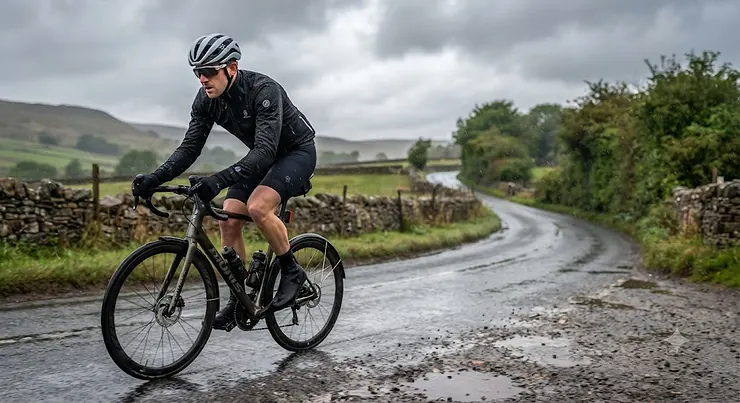
Somewhere between October and March, every cyclist in Britain has the same argument with themselves at 7am: jersey and gilet, or something more serious? A softshell jacket for cycling is usually the answer, and it’s one of those pieces of kit that quietly does more work than almost anything else in your wardrobe. A softshell jacket for cycling is a stretchy, wind-resistant, DWR-treated outer layer built specifically for riding — warmer and more breathable than a hardshell, but not fully waterproof. Think of it as the difference between a raincoat and a proper coat you’d actually want to wear all day: one shuts everything out, the other lets you move, breathe, and stay warm without turning into a plastic bag on two wheels.
The trouble is that “softshell” has become a bit of a catch-all term, slapped on everything from £30 budget buys to £250 race-cut jackets stuffed with proprietary fabric names. Spec sheets alone won’t tell you which one actually suits an 8-mile commute through Manchester drizzle versus a Saturday club run in the Peaks. That’s genuinely useful context — regular moderate activity like cycling to work is one of the ways the NHS explains that regular exercise can cut your risk of serious illness and early death, so getting the clothing right isn’t just about comfort, it’s what keeps you actually doing it through winter rather than giving up in November.
This guide walks through seven real, currently available softshell jackets spanning budget, mid-range and premium, backed by genuine spec comparison and aggregated review sentiment rather than marketing fluff. You’ll get honest analysis of who each jacket suits, a practical setup and maintenance guide, real-world scenarios matched to specific riders, and answers to the buying mistakes that trip up most first-time softshell shoppers. Prices are given as ranges only, since retail prices shift constantly — always check current pricing before you buy.
Quick Comparison: Softshell Jackets for Cycling at a Glance
| Jacket | Best For | Price Range | Windproofing |
|---|---|---|---|
| ARSUXEO Windproof Softshell | Tightest budget | Under £45 | Good |
| dhb Aeron 2.0 Softshell | Everyday commuting value | £45-£75 | Very good |
| Altura Endurance Mistral | Damp, changeable UK weather | £75-£110 | Very good |
| Endura Pro SL Softshell | Wet commutes needing near-waterproofing | £110-£160 | Excellent |
| Madison Sportive Softshell | Club runs on a mid-range budget | £70-£100 | Good |
| Castelli Perfetto RoS 3 | Serious road riders, mixed conditions | £180-£230 | Excellent |
| Assos Mille GT Hashoogi S11 | Premium all-day comfort | £220-£280 | Excellent |
Looking across the table, there’s a clear price-to-performance curve rather than a single “best” jacket: the ARSUXEO Windproof Softshell and dhb Aeron 2.0 Softshell cover the basics of wind resistance and light shower protection for a fraction of the outlay of the Castelli Perfetto RoS 3 or Assos Mille GT Hashoogi S11. Where the expensive jackets earn their keep is in fabric-level engineering — multi-panel construction, laser-cut cuffs, and fabrics designed to stay breathable at threshold effort, not just sat on a turbo. If you’re commuting under 10 miles at a moderate pace, the mid-range picks like the Altura Endurance Mistral or Madison Sportive Softshell are very likely to deliver 90% of the comfort for half the price.
💬 Just one click — help others make better buying decisions too!😊
Top 7 Softshell Jackets for Cycling: Expert Analysis
Picking a softshell isn’t just about the headline fabric name. Below, each jacket is broken down on real specs, what those specs mean once you’re actually out riding, and where aggregated reviewer sentiment lines up (or doesn’t) with the marketing copy.
1. ARSUXEO Windproof Softshell — best budget entry point on Amazon
Sitting as one of Amazon’s best-selling men’s cycling jackets, the ARSUXEO Windproof Softshell proves you don’t need a big brand name to get basic winter protection sorted. It uses a bonded windproof softshell fabric rated to roughly 15K in water resistance terms — enough to shrug off drizzle, though not a proper downpour. Based on the spec comparison with pricier jackets, the trade-off here is fabric refinement: the panelling is simpler and the stretch is more modest, so the fit runs looser than race-cut European brands. What most buyers overlook about this model is that it’s genuinely fine for utility riding at moderate pace — it’s the aggressive, sweat-heavy efforts where a basic softshell like this starts to feel clammy. Reviewers consistently report strong value for the price point and reasonably reliable wind-blocking, with a recurring theme in aggregated feedback being that sizing runs generously and a size down is often recommended. It’s a sensible option for anyone testing whether they even like riding in a softshell before committing to a pricier jacket.
Pros:
- ✅ Genuinely low entry price for a windproof softshell
- ✅ Reflective detailing helps with low-light visibility
- ✅ Widely available with fast Amazon delivery
Cons:
- ❌ Fit runs loose compared to cycling-specific European brands
- ❌ Breathability lags behind pricier fabric technologies
Priced under £45, the ARSUXEO Windproof Softshell represents strong value if your budget is the deciding factor and your rides are mostly steady-paced commutes rather than hard training efforts.
2. dhb Aeron 2.0 Softshell — best value step-up for regular commuters
The dhb Aeron 2.0 Softshell sits in dhb’s performance-focused Aeron range and uses a wind-resistant, breathable softshell fabric with a brushed inner lining for warmth. On paper this means a genuine step up from bargain-basement jackets: the fabric blocks wind effectively across the chest and shoulders while allowing more sweat vapour to escape through the back panel, which matters once your commute involves any kind of hill. Here’s what to weigh — dhb’s own product literature notes a C0 durable water repellent treatment free from harmful perfluorinated compounds, a detail that matters if you care about the environmental footprint of your kit as much as its performance. Reviewers consistently note that dhb’s fit is closer to a slim, cycling-specific cut than budget alternatives, and the two rear stash pockets plus a secure zipped pocket are a genuinely practical touch for commuters carrying keys, cards or a phone. The main gripe in aggregated feedback is that the temperature range (dhb states roughly 2-12°C) narrows its usefulness outside of proper winter months.
Pros:
- ✅ PFC-free DWR treatment, more environmentally responsible
- ✅ Secure zipped pocket plus two rear stash pockets
- ✅ Slim, cycling-specific fit rather than generic loose cut
Cons:
- ❌ Narrower usable temperature range than heavier winter jackets
- ❌ Sizing runs snug; sizing up is often recommended
At around £45-£75, the dhb Aeron 2.0 Softshell is arguably the sweet spot for riders who commute several times a week and want noticeably better breathability than entry-level jackets without paying premium prices.
3. Altura Endurance Mistral Softshell — best for damp, changeable UK weather
British cycling reviewers have consistently rated the Altura Endurance Mistral Softshell highly for exactly the conditions most UK commuters actually face: not full downpours, but that grey, drizzly, 8-12°C dampness that defines a British autumn. Its hexagonal-pattern fleece lining traps warmth while managing sweat, and the DWR-coated outer face sheds light rain without the clamminess that plagues fully sealed jackets. What most buyers overlook about the Mistral is that its “Gabba-style” close fit isn’t just about aerodynamics — it reduces the flapping and fabric noise that becomes genuinely irritating on longer rides. Aggregated professional reviews describe it as comfortable enough for a short-sleeve baselayer at around 10°C, which tells you it runs warm for its weight class. Altura backs the jacket with a two-year warranty against manufacturing defects, a detail worth noting given how quickly cheaper softshells can develop seam issues.
Pros:
- ✅ Excellent balance of warmth and breathability at 8-12°C
- ✅ Close, Gabba-style fit reduces fabric flap and noise
- ✅ Two-year manufacturer’s warranty included
Cons:
- ❌ Close fit limits room for a thick mid-layer underneath
- ❌ Reflective detailing is more modest than some competitors
In the £75-£110 range, the Altura Endurance Mistral Softshell is a genuinely strong mid-range pick, particularly for riders who spend most of their time in cool-but-not-freezing, damp-but-not-torrential UK conditions.
4. Endura Pro SL Softshell — best for near-waterproof protection
Where most softshells compromise on full waterproofing in favour of breathability, the Endura Pro SL Softshell pushes further towards genuine weatherproofing while retaining softshell stretch. It uses a fully seam-sealed, waterproof-breathable stretch fabric with a brushed inner for warmth, plus a triple rear pocket system including a zipped security pocket. Based on the spec comparison with the Altura and dhb jackets above, this is the jacket to reach for when a shower is a near-certainty rather than a possibility — the seam sealing genuinely matters here, since untaped seams are where most “waterproof” softshells actually leak. Reviewers consistently praise the flap-free fit that comes from the fabric’s stretch, along with underarm zipped vents that let you dump heat on a climb without unzipping the whole jacket. The trade-off, as with most fully sealed fabrics, is that breathability still can’t quite match an unsealed softshell during hard efforts, so pushing hard uphill in this jacket means you’ll want to use those vents.
Pros:
- ✅ Fully seam-sealed for genuine wet-weather protection
- ✅ Underarm zipped vents manage overheating on climbs
- ✅ Triple rear pocket system with dedicated security pocket
Cons:
- ❌ Breathability trails fully unsealed softshell fabrics
- ❌ Premium construction pushes it toward the pricier end of mid-range
Sitting around £110-£160, the Endura Pro SL Softshell suits commuters and club riders in genuinely wet regions — the Lake District, Wales, Scotland — where “showerproof” softshells regularly get caught out.
5. Madison Sportive Softshell — best mid-range club-run option
The Madison Sportive Softshell has built a loyal following among UK club cyclists precisely because it doesn’t try to be everything at once — it’s a warm, wind-blocking, mildly water-resistant jacket built for steady road miles rather than commuting utility. Aggregated forum and owner feedback consistently describes it as noticeably warmer than budget alternatives while staying more affordable than premium race-cut brands, striking a middle ground that suits club-run pace efforts. What most buyers overlook here is the drop-tail cut, which is longer at the back than many commuter-style jackets — a genuinely useful detail for keeping road spray off your lower back on a leaning road position. The trade-off, based on the spec comparison with the Endura Pro SL Softshell, is that Madison’s water resistance is lighter-duty; it copes with drizzle but isn’t designed for sustained rain. Reviewers note the fit runs true to size and the reflective chevrons are a solid addition for low-light club runs in winter.
Pros:
- ✅ Longer drop-tail cut suited to a leaned-forward road position
- ✅ Good warmth-to-price ratio for club-run pace
- ✅ Reflective chevrons aid low-light visibility
Cons:
- ❌ Water resistance suits drizzle rather than sustained rain
- ❌ Fewer premium fabric technologies than top-tier competitors
At roughly £70-£100, the Madison Sportive Softshell earns its place as a genuinely balanced option for road cyclists who ride regularly but don’t need race-team-level fabric engineering.
6. Castelli Perfetto RoS 3 — best for serious road riders in mixed conditions
Castelli’s Perfetto range has a cult following for good reason, and the Castelli Perfetto RoS 3 is built around Polartec AirCore fabric specifically engineered to balance wind protection, water resistance and breathability without the usual softshell trade-offs. Independent testers describe a snug, aerodynamic fit with stretch panelling that accommodates layering, plus large front zips that genuinely improve ventilation compared with rivals that rely on back-panel breathability alone. On paper this means the jacket performs across a wider range of conditions than most softshells — testers have reported it delivering in cool, changeable weather without needing a swap to a different jacket mid-ride. Reviewers consistently flag the extended tail and reflective details as thoughtful touches, though the lack of a zipped pocket and its limited protection in genuinely heavy rain are recurring notes in aggregated feedback. What most buyers overlook is that the tailored, race-cut fit runs true to Castelli’s typically snug European sizing, so it’s worth checking the size chart carefully before buying.
Pros:
- ✅ Polartec AirCore fabric balances warmth, wind and breathability
- ✅ Large front zips provide genuine on-the-move ventilation
- ✅ Extended tail and reflective details for road safety
Cons:
- ❌ No zipped pocket for valuables
- ❌ Limited protection in sustained heavy rain
Priced around £180-£230, the Castelli Perfetto RoS 3 suits committed road riders who want one jacket capable of handling most autumn and spring conditions without constant layer-swapping.
7. Assos Mille GT Hashoogi S11 — best premium all-day comfort
At the top of this line-up, the Assos Mille GT Hashoogi S11 exemplifies the “more fabric names than most riders can remember” school of premium cycling apparel — but the underlying engineering backs it up. Its main Airblock-Evo fabric delivers strong weatherproofing and breathability, while a separate NEOS softshell material on the arms adds targeted protection, and an RX thermal inner boosts insulation without excessive bulk. Reviewers describe the fit — Assos calls it bodySleeve construction — as genuinely unusual: slightly restrictive standing upright, but impressively comfortable once leaning into a racing position, which tells you plainly who this jacket is designed for. Based on the spec comparison with every other jacket on this list, this is the most technically layered fabric package here, and the price reflects that complexity. What most buyers overlook is that this fit penalises upright commuting positions — it’s genuinely built for road racing and fast club riding rather than town-centre stop-start cycling. Aggregated reviewer sentiment is overwhelmingly positive on breathability and insulation balance, with the main criticism being that the aggressive fit isn’t for everyone.
Pros:
- ✅ Multi-fabric construction targets warmth, wind and breathability separately
- ✅ Exceptional comfort in an aggressive, leaned-over riding position
- ✅ RX thermal inner adds insulation without noticeable bulk
Cons:
- ❌ Uncomfortable, restrictive fit when riding upright
- ❌ Among the most expensive softshells on the market
At around £220-£280, the Assos Mille GT Hashoogi S11 is a considered investment for serious road cyclists who spend genuine hours in the saddle each week and want a jacket engineered specifically around that riding position.
Full Product Comparison: Specs, Price and Best Use
| Jacket | Fabric Focus | Rear Pockets | Ideal Temperature | Best For |
|---|---|---|---|---|
| ARSUXEO Windproof Softshell | Basic bonded softshell | Standard | 5-15°C | Tight budgets |
| dhb Aeron 2.0 Softshell | Wind-resistant, PFC-free DWR | 2 + zip | 2-12°C | Regular commuting |
| Altura Endurance Mistral | Hexagonal fleece-lined | Standard | 8-14°C | Damp, mild UK days |
| Endura Pro SL Softshell | Seam-sealed waterproof-stretch | 3, incl. security | 4-12°C | Wet-region commuting |
| Madison Sportive Softshell | Warm, drop-tail cut | Standard | 5-13°C | Club runs |
| Castelli Perfetto RoS 3 | Polartec AirCore | 3 open | 6-16°C | Mixed-condition road riding |
| Assos Mille GT Hashoogi S11 | Multi-fabric (Airblock-Evo/NEOS/RX) | Standard | 2-12°C | Serious road racing |
Read across the rows and a pattern emerges: pocket count and security features scale with price up to a point, then premium brands like Castelli and Assos prioritise fabric complexity over storage. If carrying valuables securely matters most to you, the Endura Pro SL Softshell and dhb Aeron 2.0 Softshell actually out-perform jackets costing twice as much. Temperature ranges also cluster tighter than marketing suggests — most of these jackets genuinely work best in a fairly narrow 4-14°C band, which is worth remembering before assuming any single softshell will see you through a whole winter.
Practical Usage Guide: Setting Up and Maintaining Your Softshell
Getting a softshell jacket for cycling to actually perform well isn’t just about buying the right one — first-use setup and ongoing care make a measurable difference to warmth and windproofing over time.
Start with fit before anything else: try the jacket on over your actual winter riding kit (base layer plus jersey), not a t-shirt, since softshells are cut to be worn in the saddle rather than standing upright. Once it fits, resist the urge to wash it in a normal cycle with standard detergent — ordinary laundry powder strips DWR coatings faster than road grime does. Instead, use a technical wash formulated for outerwear, run on a cold, gentle cycle with no fabric softener, and check every zip is done up first to avoid snagging the fabric.
A common mistake in the first 30 days is under-layering and blaming the jacket for feeling cold, when actually the temperature ranges quoted by brands assume a base layer is already doing some of the work. Reapplying a DWR treatment every few months — more often if you ride daily — keeps water beading off the surface rather than soaking in, which matters because a saturated outer layer loses its wind-blocking ability almost entirely. Finally, dry your jacket away from direct heat sources like radiators, which can degrade both stretch fibres and membrane coatings over time; a hanger in a well-ventilated room does the job just as well without the risk.
Real-World Scenarios: Matching Riders to the Right Jacket
If you’re a university student commuting three miles into town on a budget that barely covers textbooks, the ARSUXEO Windproof Softshell or dhb Aeron 2.0 Softshell make far more financial sense than anything premium — you need reliable wind-blocking for short, moderate-effort trips, not race-cut aerodynamics you’ll never notice at 12mph.
If you’re commuting 10-15 miles each way through genuinely wet terrain — think Cardiff, Manchester or the Scottish Central Belt — the Endura Pro SL Softshell earns its higher price through seam sealing that a basic DWR coating simply can’t match. A jacket that leaks at the shoulder seams after 20 minutes of steady rain isn’t saving you anything, however cheap it was.
If you’re a weekend club rider putting in 40-60 miles at a steady tempo, the Altura Endurance Mistral Softshell or Madison Sportive Softshell hit the balance most riders actually need: warm enough for a three-hour ride, breathable enough not to arrive soaked in sweat, and priced sensibly enough that crashing it on a wet descent doesn’t feel catastrophic. For riders training seriously and covering 150+ miles a week in genuinely variable conditions, the Castelli Perfetto RoS 3 or Assos Mille GT Hashoogi S11 are where the extra investment starts paying for itself in reduced layer-swapping and better performance across a wider temperature band.
How to Choose a Softshell Jacket for Cycling
- Match the temperature range to your actual riding season. Most softshells cluster around 2-14°C — check the brand’s stated range rather than assuming “winter jacket” covers everything down to freezing.
- Prioritise seam sealing if you ride in sustained rain. A DWR coating alone sheds light drizzle; taped seams like those on the Endura Pro SL Softshell matter far more in prolonged downpours.
- Check the fit against your actual riding position. Race-cut jackets like the Assos Mille GT Hashoogi S11 are designed to be worn leaned forward, not standing upright at traffic lights.
- Count the pockets you’ll actually use. Commuters generally want a secure zipped pocket for cards and keys; club riders often prioritise capacity for gels and a spare tube instead.
- Consider PFC-free DWR treatments if sustainability matters to you. Brands including dhb have moved to C0 treatments that avoid harmful perfluorinated chemicals.
- Factor in visibility, not just warmth. Reflective detailing genuinely matters for winter commutes done partly in the dark.
- Buy on your actual budget, not the “ideal” jacket. A well-fitted budget softshell worn consistently beats a premium jacket left in the wardrobe because it felt like too much money to risk on a wet commute.
DWR-Treated Softshells: What the Coating Really Does
Every softshell in this guide carries some form of durable water repellent, or DWR, treatment — but what most buyers overlook is that DWR isn’t a waterproof membrane, it’s a surface coating that makes water bead and roll off fabric rather than soaking in. The spec sheet won’t tell you this, but user reports across multiple jackets consistently note the same pattern: DWR performance is excellent when new, then gradually degrades with washing, UV exposure and general wear, usually needing refreshing within 6-12 months of regular use.
This matters practically because a softshell relying purely on DWR — like the budget-tier ARSUXEO Windproof Softshell — will start “wetting out” (soaking through rather than beading) noticeably sooner than a fully seam-sealed jacket like the Endura Pro SL Softshell, even if both started with similar water-resistance ratings. It’s a useful reminder, backed by Cycling UK’s detailed group test of winter softshells, which found that repellency fades with use but responds well to re-treatment, that a DWR-treated jacket needs occasional maintenance rather than being a one-and-done purchase. Reapplying a wash-in DWR treatment restores much of the original performance and is genuinely one of the highest-value five minutes you can spend on any softshell jacket in this guide.
Stretch Panel Cycling Jackets: Why Fit Beats Fabric Weight
It’s tempting to judge a softshell jacket for cycling purely on fabric grams-per-square-metre or waterproof rating, but stretch panelling arguably matters more for comfort on the bike than either. Every jacket in this line-up uses some degree of elastane blended into the main fabric, but where that stretch is placed differs significantly — and that placement is what most buyers overlook when comparing spec sheets side by side.
The Castelli Perfetto RoS 3 and Assos Mille GT Hashoogi S11, for instance, concentrate stretch panels around the shoulders and underarms specifically to accommodate the reach-forward riding position, while budget jackets like the ARSUXEO Windproof Softshell tend to use a more uniform stretch blend that works fine standing still but can feel restrictive once you’re leant over the bars for two hours. Here’s what to weigh: a jacket with generous but poorly placed stretch will still ride up at the lower back on a leaned position, exposing skin to cold air exactly where you need coverage most. Reviewers consistently rate the Altura Endurance Mistral Softshell and Madison Sportive Softshell well on this front specifically because of their drop-tail cuts, which combine stretch with cut-based coverage rather than relying on elastane alone.
Softshell vs Hardshell: Which Wins for UK Cycling?
| Factor | Softshell | Hardshell |
|---|---|---|
| Breathability | High | Lower |
| Full waterproofing | Rarely | Usually yes |
| Warmth for weight | Better | Bulkier for same warmth |
| Packability | Moderate | Often very packable |
| Best For | Regular, mixed-condition riding | Sustained heavy rain |
The core distinction, as Cycling Weekly’s winter jacket testing explains, is that a water-resistant softshell trades some waterproofing for warmth and comfort, using a softer, stretchier fabric than a true hardshell. In practice, that means a softshell like the Altura Endurance Mistral Softshell wins for the majority of UK rides — grey, drizzly, changeable — where you’d rather stay comfortable and breathe properly than be bone-dry but clammy. A hardshell only really justifies its bulk and reduced breathability when you know you’re riding into sustained, heavy rain for hours, which for most commuters and club riders is the exception rather than the rule.
Best Softshell for Commuting: A Dedicated Buyer’s Guide
Commuting has genuinely different requirements from weekend club riding, and it’s worth treating “best softshell for commuting” as its own question rather than assuming your fastest, most expensive jacket automatically wins. Commuters typically ride shorter distances at a more moderate, stop-start pace — traffic lights, junctions, occasional dismounts — which changes what actually matters in a jacket.
A relaxed, non-race cut like the dhb Aeron 2.0 Softshell or ARSUXEO Windproof Softshell genuinely suits commuting better than an aggressive race fit, since you’re rarely holding a leaned-forward position for a sustained period. Storage matters more too — a secure zipped pocket for a phone, keys or a travel card, like the ones on the dhb Aeron 2.0 Softshell and Endura Pro SL Softshell, solves a genuine daily problem that club-focused jackets sometimes overlook. Reflective detailing is arguably more important for commuters than for weekend riders too, given how much winter commuting happens in the dark on both ends of the day. If wet weather is a near-daily reality on your route, the extra investment in the Endura Pro SL Softshell‘s seam sealing pays for itself within a single soggy winter, avoiding the frustration of arriving at work damp through the shoulders.
Common Mistakes When Buying a Cycling Softshell
One of the most frequent errors is buying based on temperature rating alone without accounting for effort level — a jacket rated to 4°C at a steady pace can feel genuinely too warm if you’re climbing hard, since exertion generates significant additional heat regardless of ambient temperature. Another common mistake is assuming “softshell” automatically means fully waterproof; as covered above, most rely on DWR coatings that handle drizzle but not sustained rain, and buyers who skip this distinction end up disappointed on their first proper downpour.
Sizing is a recurring pitfall too — cycling-specific brands like Castelli and Assos run notably snug compared with general sportswear sizing, and reviewers across multiple products in this guide consistently flag this. Buying without checking a specific brand’s size chart, rather than assuming your usual jacket size applies, is an easily avoidable error. Finally, neglecting DWR maintenance is perhaps the most common mistake of all: a jacket that performed brilliantly when new but hasn’t been re-proofed in two years will disappoint you and unfairly tank your opinion of a genuinely well-made product.
Long-Term Cost & Maintenance
| Jacket | Approx. Price Range | DWR Refresh Frequency | Expected Lifespan (regular use) |
|---|---|---|---|
| ARSUXEO Windproof Softshell | Under £45 | Every 4-6 months | 1-2 years |
| dhb Aeron 2.0 Softshell | £45-£75 | Every 6 months | 2-3 years |
| Altura Endurance Mistral | £75-£110 | Every 6-9 months | 2-3 years |
| Endura Pro SL Softshell | £110-£160 | Every 9-12 months | 3-4 years |
| Madison Sportive Softshell | £70-£100 | Every 6-9 months | 2-3 years |
| Castelli Perfetto RoS 3 | £180-£230 | Every 9-12 months | 3-5 years |
| Assos Mille GT Hashoogi S11 | £220-£280 | Every 12 months | 4-5+ years |
Total cost of ownership tells a slightly different story than the sticker price alone: the ARSUXEO Windproof Softshell‘s low upfront cost is offset by a shorter realistic lifespan and more frequent re-proofing, while the Assos Mille GT Hashoogi S11‘s high price spreads across a genuinely longer usable life if properly maintained. For riders using their softshell year-round rather than seasonally, this cost-per-year calculation often favours mid-to-premium jackets more than the headline price suggests — worth remembering if commuting five days a week is part of a wider Cycle to Work scheme salary sacrifice arrangement, which can reduce the effective cost of premium kit substantially through tax savings.
Windproof Softshells: Safety, Visibility and UK Regulations
Windproofing is arguably the single most important property of a genuine softshell jacket for cycling, since wind chill — not rain — is what actually makes most UK winter rides miserable. All seven jackets in this guide block wind effectively across the chest and shoulders, though back-panel breathability varies, which is why some run noticeably cooler on descents than others.
On the regulatory side, there’s no specific UK legal requirement for cyclists to wear high-visibility or reflective clothing at any time of day, though front and rear lights are mandatory at night. That said, reflective detailing — present to varying degrees on every jacket reviewed here — is a sensible, low-cost safety addition rather than a legal obligation. If you’re commuting through a company scheme, it’s also worth knowing that, per GOV.UK guidance on bikes for employees, lending or hiring bikes and kit to staff isn’t treated as a taxable benefit provided it’s offered to everyone and mainly used for getting to work, which can make premium windproof kit considerably more affordable through salary sacrifice.
Frequently Asked Questions
❓ Is a softshell jacket warm enough for winter cycling?
❓ Can you wash a cycling softshell jacket in a normal washing machine?
❓ What's the difference between a windproof and a waterproof cycling jacket?
❓ How often should I re-proof a DWR-treated softshell?
❓ Are softshell jackets suitable for commuting in the rain?
Conclusion
Choosing a softshell jacket for cycling isn’t really about finding the single “best” one — it’s about matching fabric technology, fit and price to how, where and how often you actually ride. Budget picks like the ARSUXEO Windproof Softshell and dhb Aeron 2.0 Softshell cover the fundamentals of wind resistance and light rain protection at a genuinely accessible price, while mid-range options like the Altura Endurance Mistral Softshell and Madison Sportive Softshell strike a sensible balance for regular riders who want noticeably better performance without premium pricing. For committed cyclists riding through genuinely variable conditions week-round, the Endura Pro SL Softshell‘s seam sealing, the Castelli Perfetto RoS 3‘s Polartec AirCore fabric, and the Assos Mille GT Hashoogi S11‘s multi-fabric construction each justify their higher price through measurable performance gains rather than brand name alone.
Whichever jacket you land on, the maintenance basics — proper washing, regular DWR refreshing, and checking fit against your actual riding position — matter just as much as the initial purchase decision. A well-cared-for mid-range softshell will consistently outperform a neglected premium one, so treat the jacket as an ongoing relationship with your winter riding rather than a one-off transaction.
✨ Don’t Miss These Exclusive Deals!
🔍 Ready to gear up for winter riding? Click on any highlighted jacket above to check current pricing and availability. The right softshell will keep you comfortable, visible and genuinely looking forward to your winter commute rather than dreading it!
Recommended for You
- Softshell vs Fleece Jacket: 7 Honest Picks for 2026 (UK Guide)
- Best Softshell Jacket 2026: 7 Windproof Picks, Reviewed
- Mens Hardshell Jacket: 7 Best Picks Tested for UK Weather (2026)
Disclaimer: This article contains affiliate links. As an Amazon Associate, I earn from qualifying purchases. If you purchase products through these links, we may earn a small commission at no additional cost to you.
✨ Found this helpful? Share it with your friends! 💬🤗
